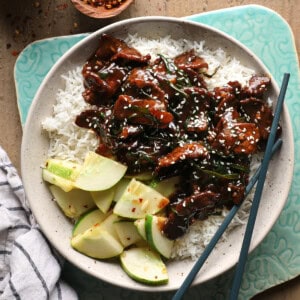
This Mongolian Beef has thin slices of deeply browned steak tossed in a glossy sweet, savory, garlicky sauce with a noticeable kick of heat, then finished with plenty of green onions. While testing it, I initially added the garlic and ginger with the beef, but they scorched over the high heat needed for a good sear. Sautéing them briefly after the beef comes out lets them become fragrant without burning.
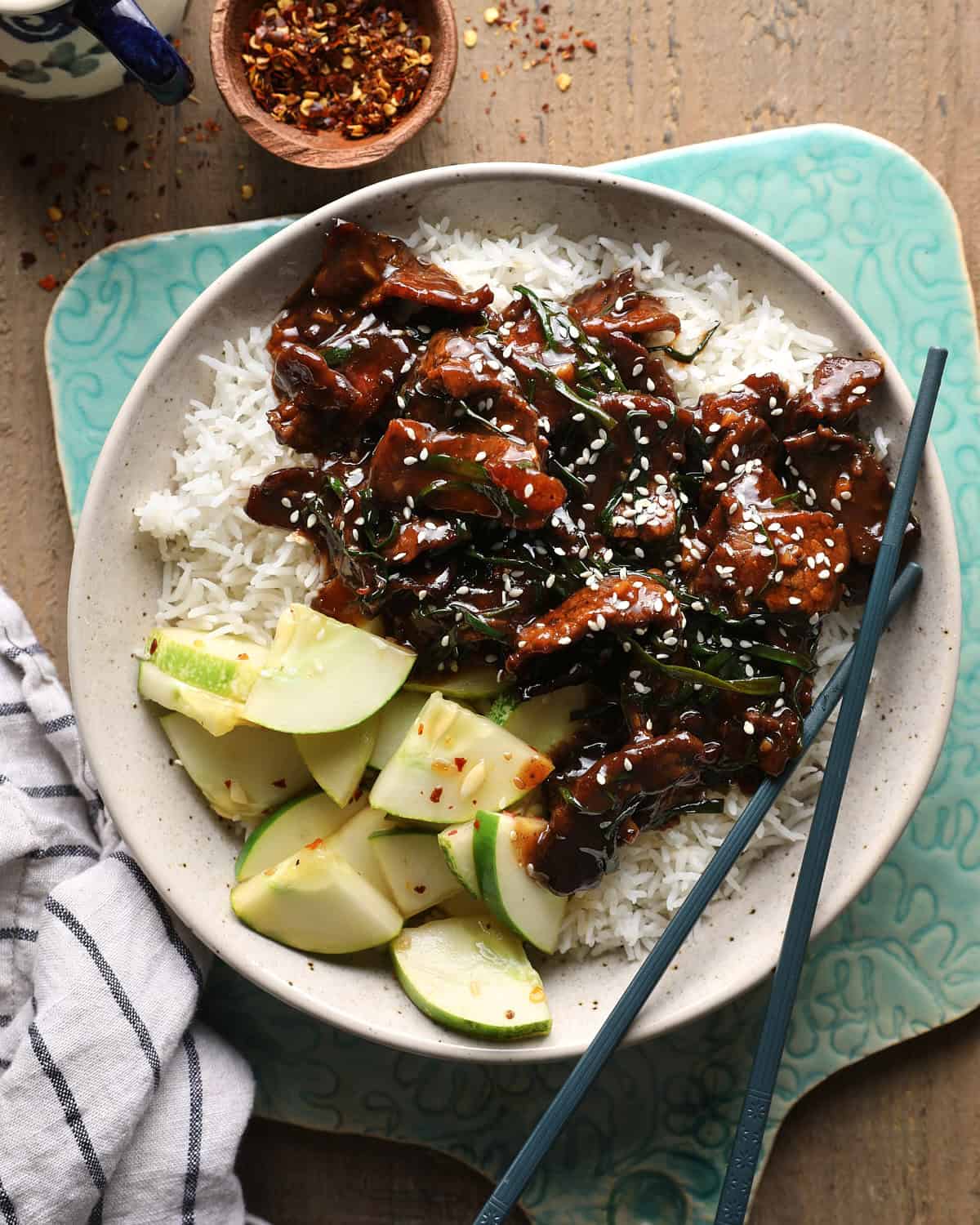
I also started with less water but found the sauce became too concentrated as it reduced. The final ¾ cup keeps the flavor bold while leaving plenty of sauce to coat 2 pounds of beef and spoon over rice. If you love saucy takeout-inspired dinners, try my Easy Orange Chicken Recipe
🔍 At a Glance
- ⏱️ Ready in: About 35–40 minutes, depending on batch size minutes (15 min. prep, 20-25 min. cook)
- 👥 Serves: 6
- 📌 Main Ingredients: Steak, green onions, soy sauce, brown sugar, garlic, & ginger
- 🔥 Cook Method: High-heat stovetop stir-fry
- 😋 Flavor Profile: Sweet, savory, garlicky, tangy, & slightly spicy
- 📝 Great For: Weeknight dinners & homemade takeout nights
Table of Contents
- 🔍 At a Glance
- Why This Recipe Works
- Ingredients & Why They Matter
- Best Steak for Stir Fry
- How To Slice Beef for Stir Fry
- Mongolian Beef Step by Step
- Pro Tips for Perfect Mongolian Beef
- Common Mistakes
- Swap It Up: Variations to Try
- What To Serve With This Recipe
- Easy Mongolian Beef Recipe
- Recipe FAQs
- More Asian Inspired Recipes
Why This Recipe Works
- The sauce is balanced: Brown sugar gives it the sweetness you expect from Mongolian beef, while rice vinegar and sriracha add acidity and heat so it does not taste one-dimensionally sweet.
- Cornstarch does double duty: A light coating helps the thin beef develop browned edges, while another 1½ tablespoons thicken the sauce until it is glossy and clings to every piece.
- The aromatics get their own moment: Searing the steak first, then briefly sautéing the garlic and ginger gives you deeply browned beef without scorching the aromatics.
Ingredients & Why They Matter
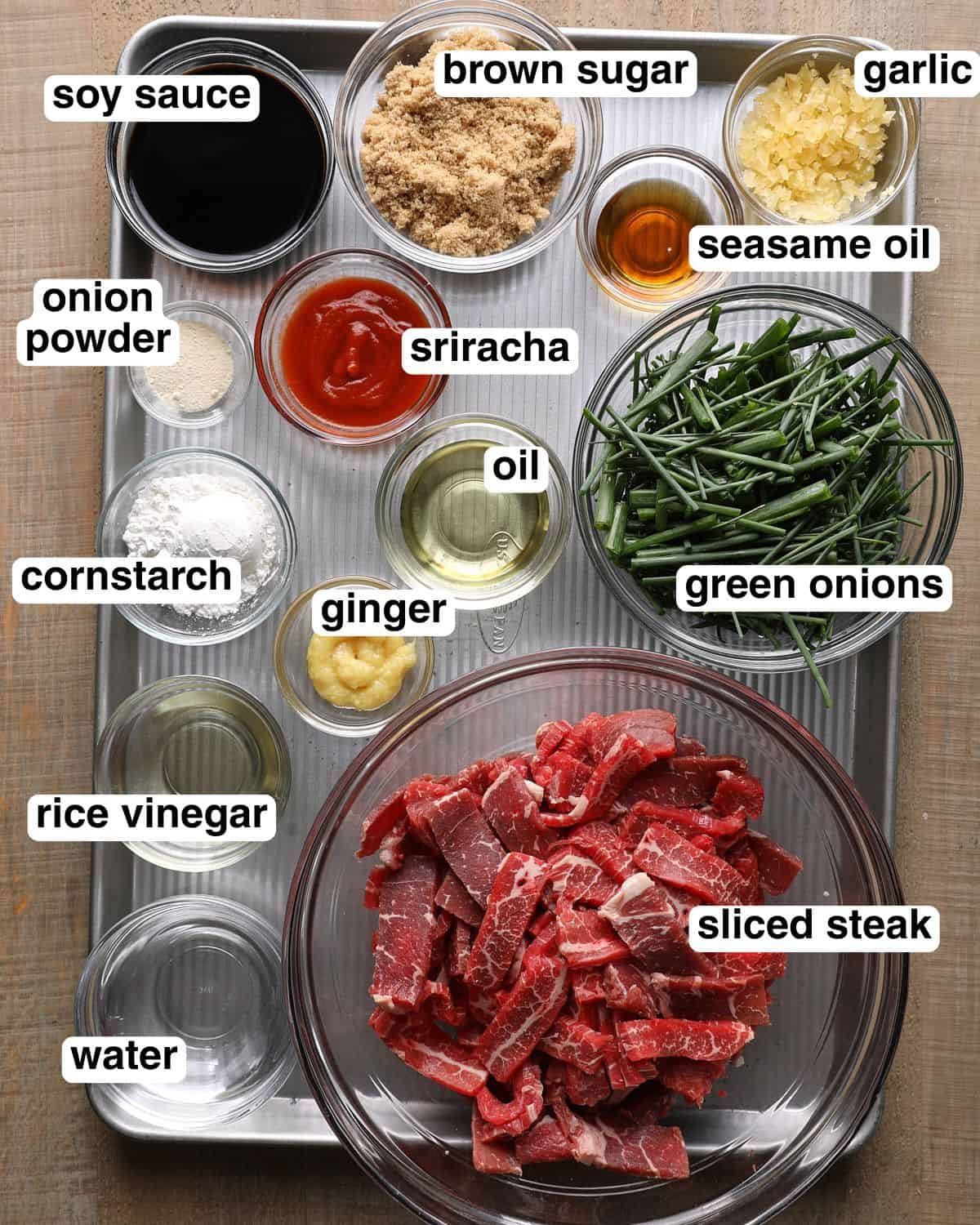
- Steak: Use 2 pounds of boneless steak, sliced about ⅛ inch thick against the grain. I tested this recipe with a mixture of flank steak and New York strip because that is what I had in my freezer, and both worked well.
- Cornstarch: Two tablespoons coat the beef, while another 1½ tablespoons thicken the sauce.
- Neutral Oil: Start with 2 tablespoons, plus more as needed between batches. Avocado, vegetable, or canola oil are good options for high-heat searing.
- Green Onions: Use the green portions from 2 large bunches, cut into roughly 2-inch pieces. They go in at the very end and only need enough heat to wilt slightly.
- Water: I landed on ¾ cup after originally testing the sauce with less. The smaller amount reduced too quickly and became more concentrated than I wanted.
- Soy Sauce: ½ cup regular soy sauce provides most of the salt and savory flavor, so no additional salt is needed. Sodium varies by brand.
- Brown Sugar: ½ cup packed brown sugar creates the characteristic sweetness of Mongolian beef and helps give the finished sauce its rich, glossy quality.
- Rice Vinegar: 3 tablespoons balance the sweetness with acidity without making the sauce taste vinegary.
- Sriracha: 2 tablespoons give this version a noticeable amount of heat while keeping the sauce sweet and savory. If you are sensitive to spice, start with 1 tablespoon.
- Toasted Sesame Oil: 1 tablespoon adds concentrated nutty, toasted flavor.
- Ginger Paste: 1½ tablespoons add plenty of warm ginger flavor and can be added directly to the skillet without any grating.
- Onion Powder: 1 teaspoon reinforces the onion flavor throughout the sauce.
- Garlic: Ten cloves make the finished dish boldly garlicky. Press or finely mince them so they cook quickly and evenly.
- Cooked Rice: Perfect for soaking up the extra sauce.
Find the full ingredient list and exact measurements in the recipe card below.
Best Steak for Stir Fry
I recommend using a boneless steak that is tender enough for fast, high-heat cooking. I tested this recipe with a combination of flank steak and New York strip because that is what I already had in my freezer, and both worked well.
My top choices are:
- Ribeye: Very tender and well-marbled, so it stays especially juicy and flavorful.
- New York Strip: Tender, beefy, and easy to slice into even pieces.
- Flank Steak: Leaner with plenty of beef flavor. Slicing thinly against the grain is particularly important.
- Flap Steak: Also called sirloin bavette, this cut has lots of beefy flavor and works well when sliced very thinly against the grain.
Top sirloin and flat iron are also good options. Skirt steak and Denver steak should work fine as well, although skirt steak has a pronounced grain and needs to be sliced carefully.
I would skip brisket, chuck roast, eye of round, bottom round, and most precut stew meat for this recipe. Those cuts are better suited to slower cooking, braising, or additional tenderizing rather than the quick sear used here.
How To Slice Beef for Stir Fry
Slice the steak about ⅛ inch (3 mm) thick against the grain. Look for the visible lines running through the meat, then cut across those lines rather than in the same direction. Cutting against the grain shortens the muscle fibers, making the finished beef much easier to chew.
If the steak is difficult to slice that thinly, place it in the freezer for about 20–30 minutes, or just until firm but not frozen solid. The firmer texture makes it much easier to cut clean, even slices with a sharp knife.
Mongolian Beef Step by Step
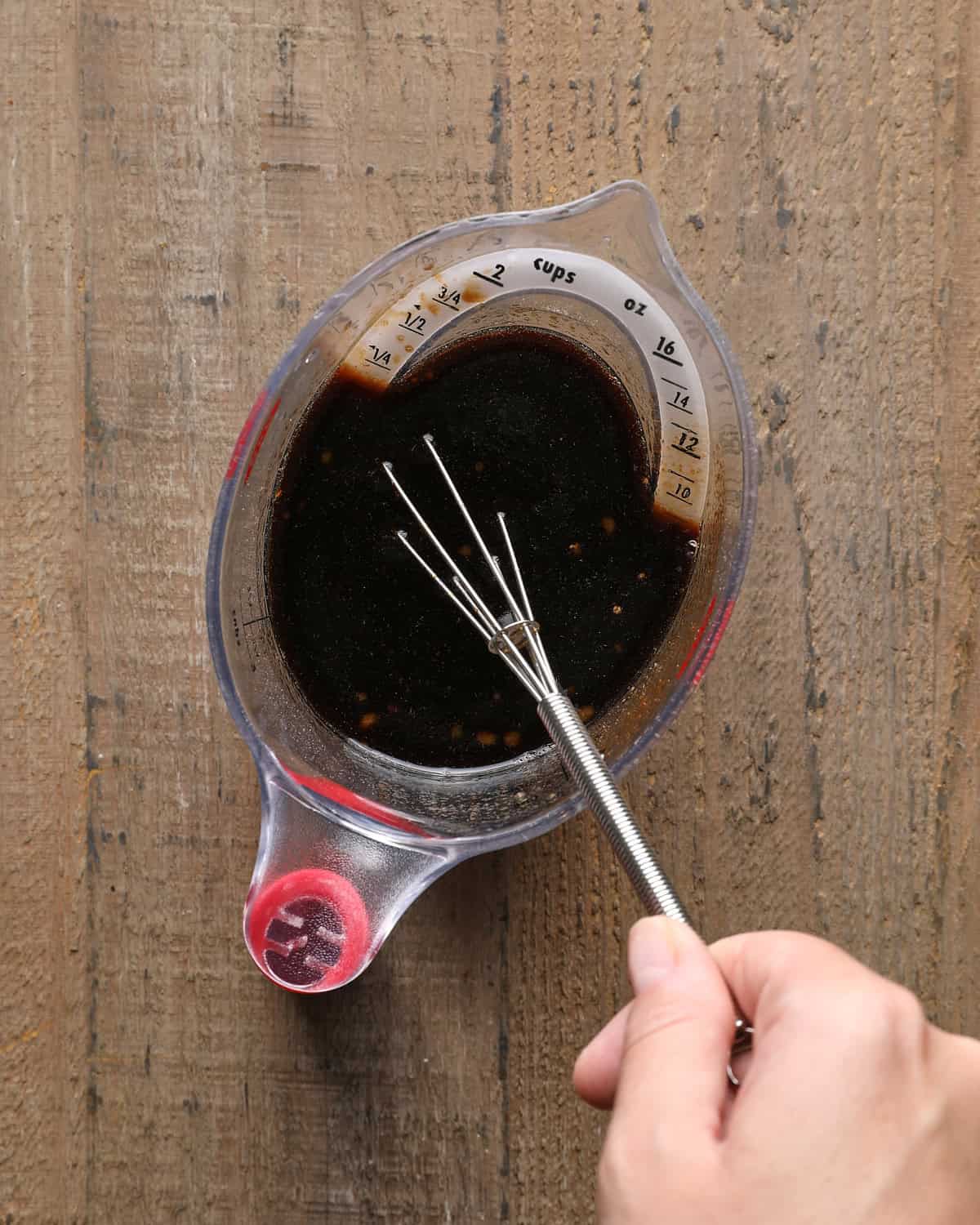
- Make the base of the sauce. In a medium bowl or measuring cup, whisk together the soy sauce, brown sugar, rice vinegar, sriracha, sesame oil, and onion powder until combined.
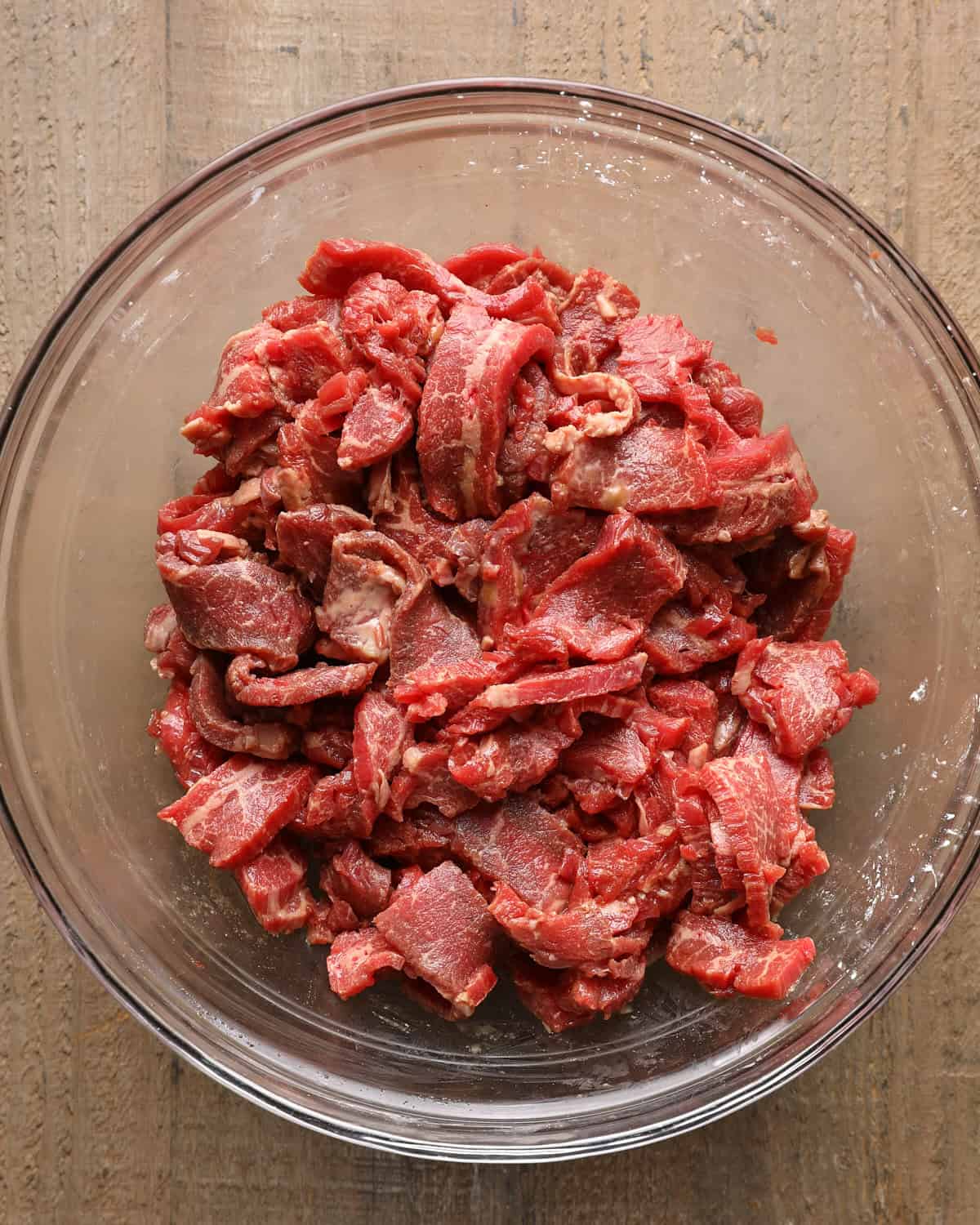
- Season the beef. Add the thinly sliced beef to a large bowl. Pour in about 2 tablespoons of the prepared sauce, then add 2 tablespoons cornstarch and toss until the beef is evenly coated. The remaining sauce should stay separate and clean.
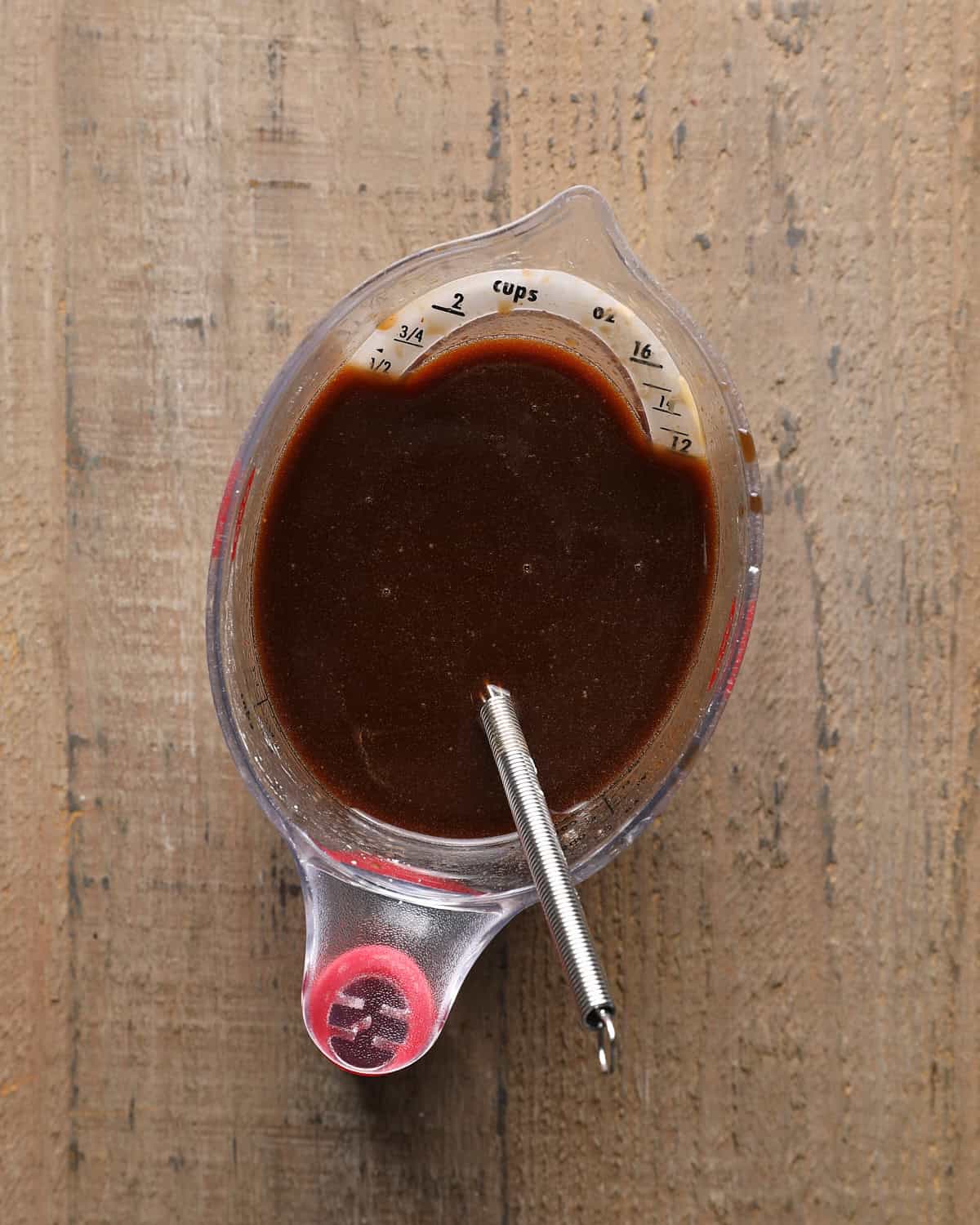
- Finish the sauce. To the remaining sauce, whisk in the water and 1½ tablespoons cornstarch until completely smooth. Set aside while you cook the beef.
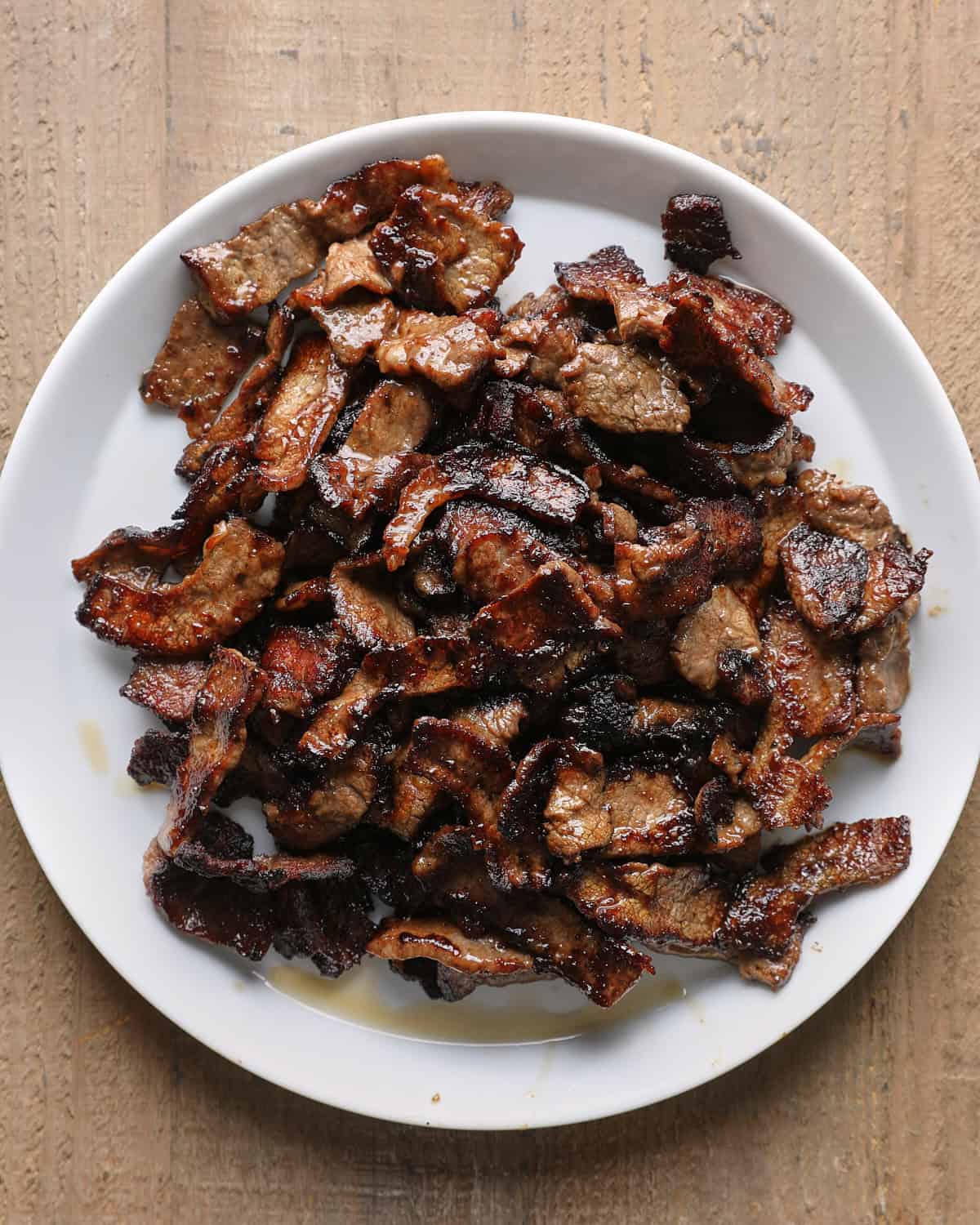
- Sear the beef. Heat 2 tablespoons oil in a large wok or skillet over high heat. Working in batches, arrange the beef in a single layer and sear until deeply browned and just cooked through. Transfer each batch to a clean plate, adding more oil as needed between batches. The beef should have deeply browned edges with no raw-looking centers.
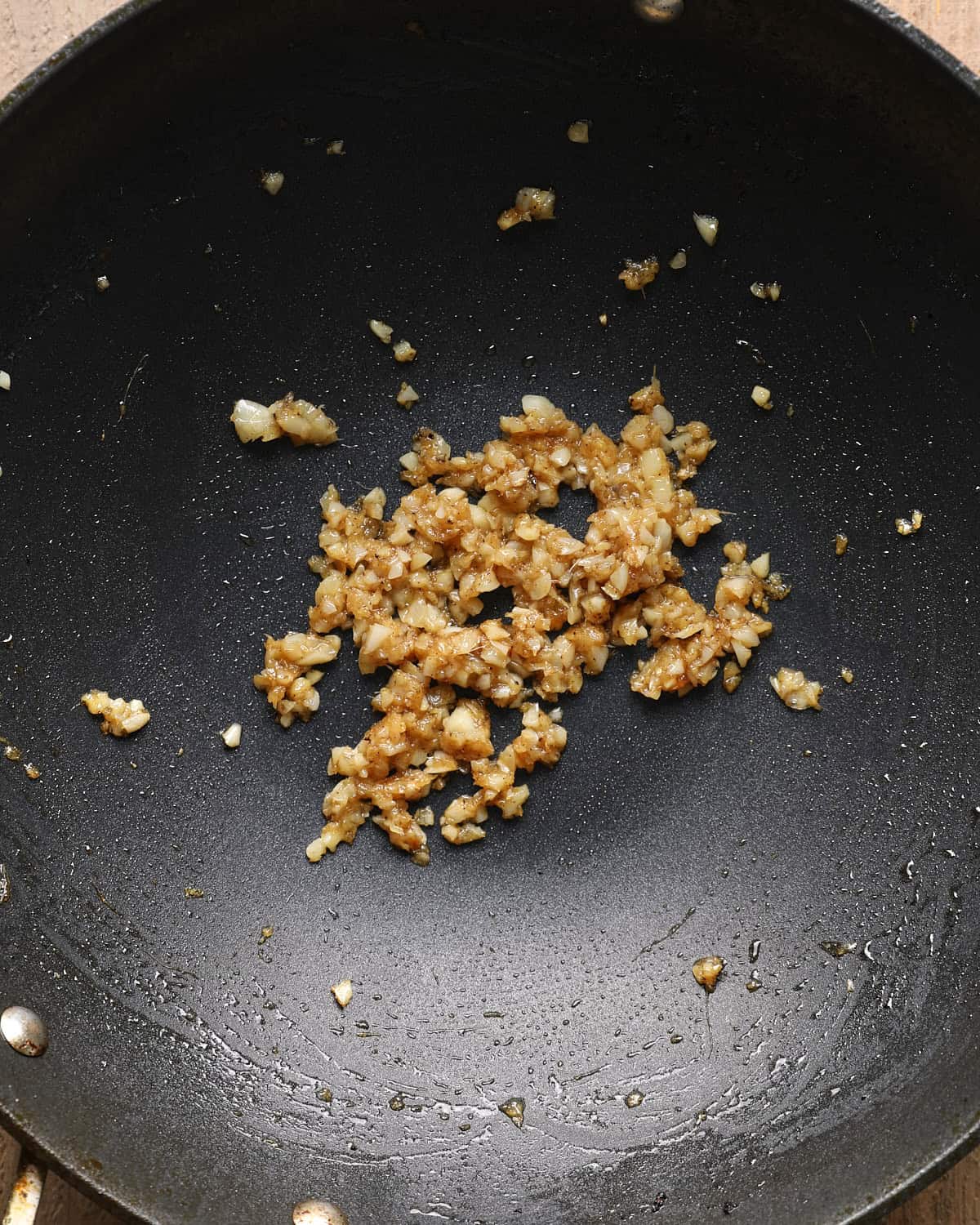
- Sauté the garlic and ginger. Reduce the heat to medium. Add the garlic and ginger paste to the skillet and cook for about 30–60 seconds, stirring frequently, just until very fragrant. Do not let the garlic become deeply browned or burnt.
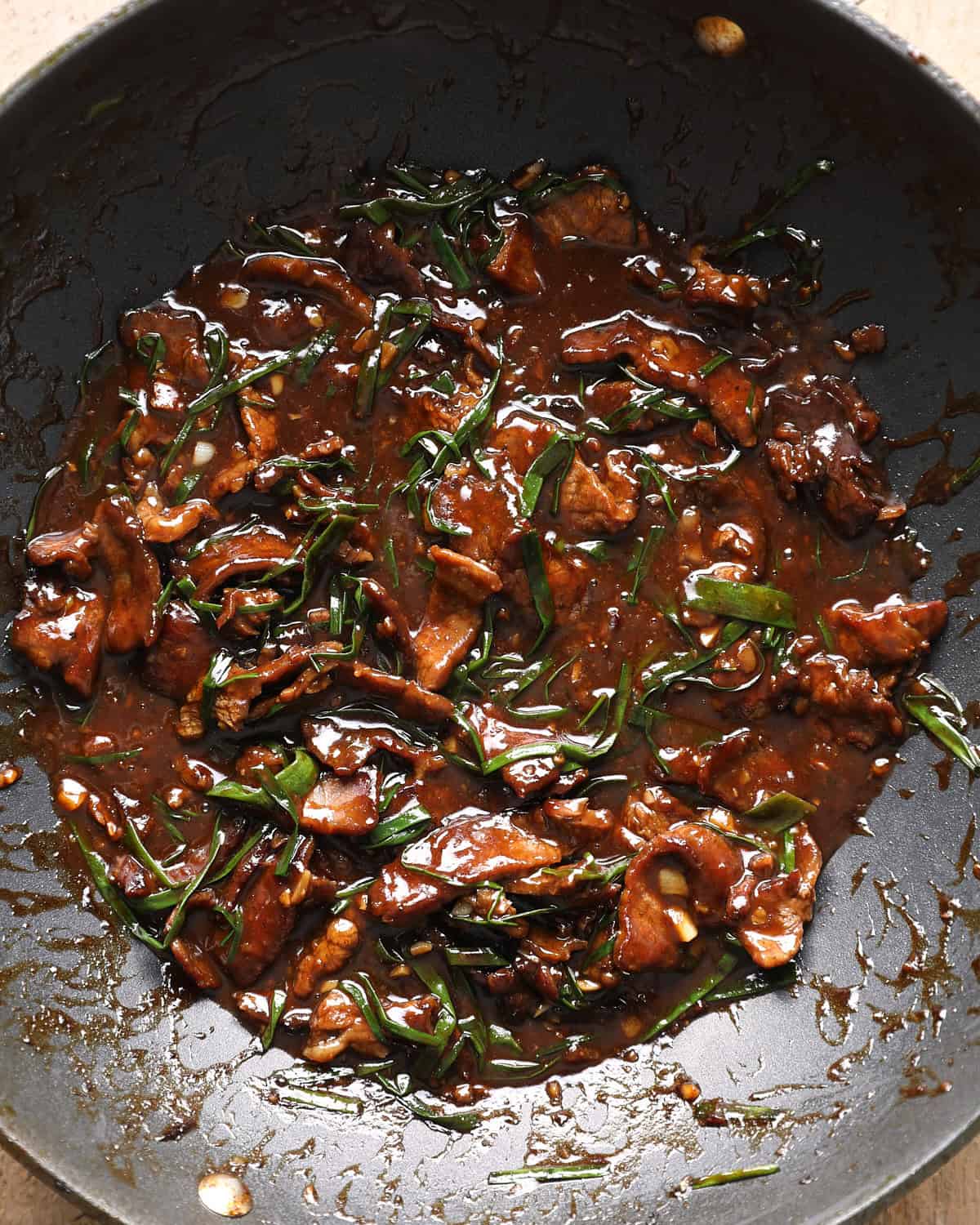
- Finish the Mongolian beef. Whisk the sauce again, then pour it into the skillet and simmer until glossy and thickened. Return the beef to the pan and add the green portions of the green onions. Toss until everything is evenly coated, the beef is heated through, and the green onions are just wilted. If the sauce reduces too much or becomes thicker than you’d like, stir in 2–4 tablespoons warm water, 1 tablespoon at a time, until it reaches your desired consistency.
💡Bri’s Best Tip
Use a scorching hot pan and let the beef actually develop color. Once the beef hits the skillet, give it a chance to sit and sear before moving it around. That deep browning is what gives the beef the best flavor and texture. If you stir it constantly or crowd the pan, it will steam instead of getting those browned edges.
Pro Tips for Perfect Mongolian Beef
- Chill the steak before slicing: 20-30 minutes in the freezer makes it much easier to create consistent ⅛-inch slices because the steak firms up.
- Get the skillet very hot: High heat allows the beef to develop browned edges quickly before the thin slices overcook.
- Cook in batches: Two pounds of beef will overcrowd most home skillets. Keep the slices in a single layer so they sear rather than steam.
- Give the beef time to brown: Avoid constantly stirring as soon as it hits the pan. Let the pieces make good contact with the hot surface first.
- Lower the heat after searing: The skillet is extremely hot after cooking the beef. Reducing it to medium before adding the garlic and ginger gives you more control over the aromatics.
- Whisk right before pouring: Cornstarch settles while the beef cooks, so redistribute it thoroughly before adding the sauce to the pan.
- Loosen leftovers with water: The sauce thickens quite a bit once refrigerated. When reheating, add 1–2 tablespoons warm water at a time until it loosens back into a glossy sauce that coats the beef.
Common Mistakes
- Slicing with the grain: Leaving the muscle fibers long makes the finished beef noticeably chewier.
- Cutting the steak too thick: Thick pieces require a longer cooking time and make it harder to achieve a fast sear while keeping the beef tender.
- Crowding the skillet: Too much beef at once lowers the pan temperature and traps steam, leading to pale meat rather than deeply browned edges.
- Cooking the aromatics too long: Garlic only needs about 30–60 seconds once it hits the skillet. Deeply browned garlic can make the finished sauce bitter.
- Cooking the green onions too long: The green portions only need enough heat to wilt slightly. Adding them sooner makes them overly soft.
Swap It Up: Variations to Try
- Extra spicy: Increase the sriracha to 3 tablespoons. I have not tested this variation, so add the extra tablespoon based on your heat preference.
- Add broccoli: Stir-fry 3 cups small broccoli florets in 1 tablespoon neutral oil until crisp-tender, about 3–4 minutes. Remove them before searing the beef, then return them to the skillet with the beef in step 6. For a recipe specifically developed around beef and broccoli, try my Easy Beef And Broccoli Noodles Stir Fry.
- Use spinach instead of green onions: Replace the green onions with 4–5 packed cups baby spinach. Add it in step 6 after the beef returns to the skillet and toss just until wilted, about 1–2 minutes.
What To Serve With This Recipe
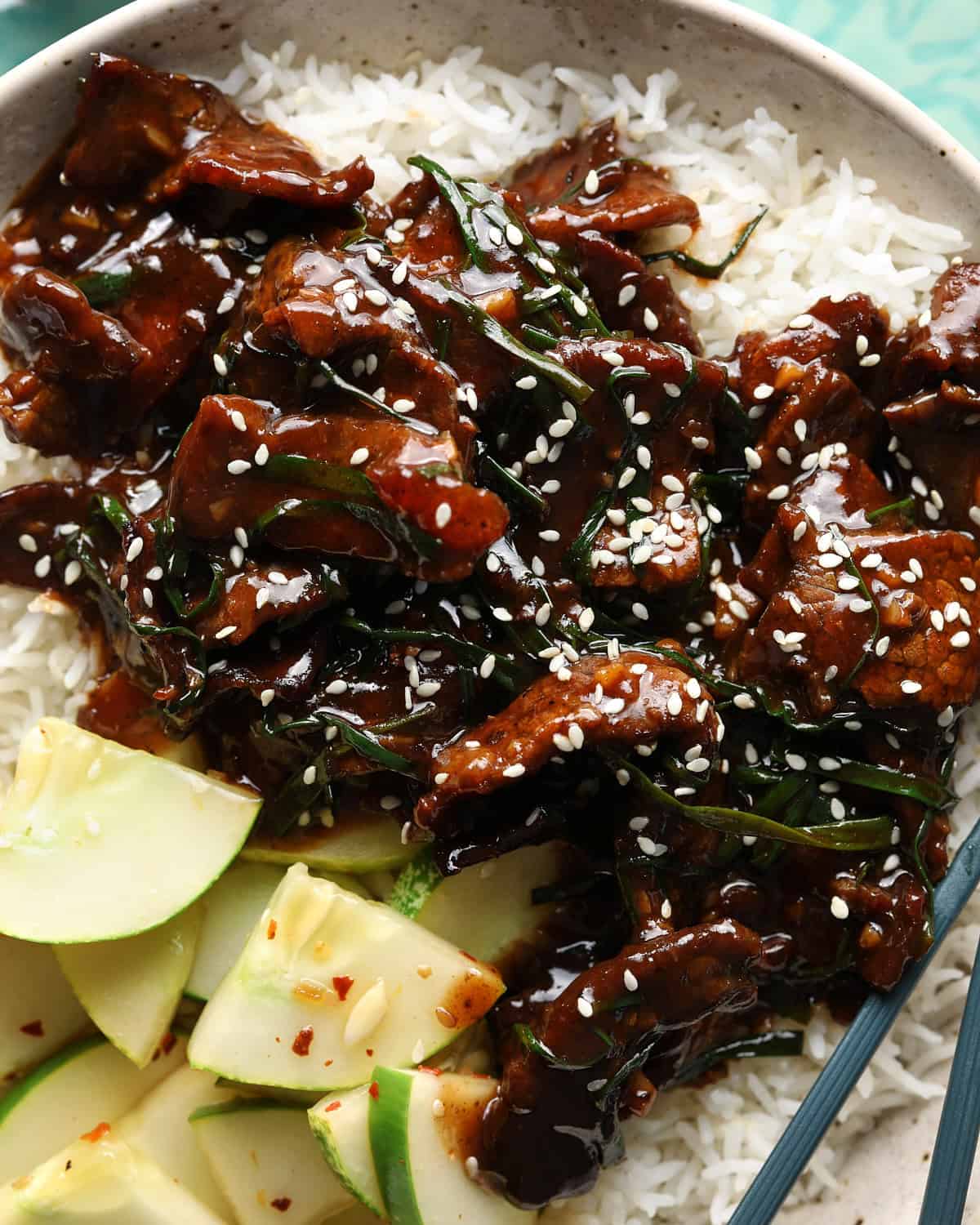
- My favorite way to serve Mongolian beef is over hot rice so none of that glossy sauce goes to waste.
- Rice: Serve it over steamed jasmine or white rice. My Instant Pot Basmati Rice is another easy option.
- Something fresh: Spicy Cucumber Salad adds a cool, crisp contrast to the rich sweet-savory beef.
- Something crispy: Add Air Fryer Frozen Egg Rolls for an easy homemade takeout night.
- More ideas: See my guide to What To Serve With Stir Fry for more vegetable, rice, appetizer, and side-dish ideas.
Easy Mongolian Beef
Equipment
Ingredients
Beef
- 2 pounds boneless steak flank, New York strip, ribeye, or flap steak; sliced about ⅛ inch thick against the grain
- 2 tablespoons cornstarch
- 2 tablespoons neutral oil plus more as needed
- Cooked rice for serving
Sauce
- ½ cup soy sauce regular, not low-sodium
- ½ cup packed brown sugar
- 3 tablespoons rice vinegar
- 2 tablespoons sriracha use 1 tablespoon if sensitive to spice
- 1 tablespoon toasted sesame oil
- 1 teaspoon onion powder
- ¾ cup water
- 1½ tablespoons cornstarch
Aromatics
- 1½ tablespoons ginger paste
- 10 cloves garlic pressed or finely minced
- 2 large bunches green onions green portions only, cut into 2-inch pieces
Instructions
- Make the base of the sauce. In a medium bowl or measuring cup, whisk together the soy sauce, brown sugar, rice vinegar, sriracha, sesame oil, and onion powder until combined.½ cup soy sauce½ cup packed brown sugar3 tablespoons rice vinegar2 tablespoons sriracha1 tablespoon toasted sesame oil1 teaspoon onion powder
- Season the beef. Add the thinly sliced beef to a large bowl. Pour in about 2 tablespoons of the prepared sauce, then add 2 tablespoons cornstarch and toss until the beef is evenly coated.2 pounds boneless steak2 tablespoons cornstarch
- Finish the sauce. To the remaining sauce, whisk in the water and 1½ tablespoons cornstarch until completely smooth. Set aside.¾ cup water1½ tablespoons cornstarch
- Sear the beef. Heat 2 tablespoons oil in a large wok or skillet over high heat. Working in batches, arrange the beef in a single layer and sear until deeply browned and just cooked through. Transfer to a clean plate, adding more oil as needed between batches.2 tablespoons neutral oil
- Sauté the garlic and ginger. Reduce the heat to medium. Add the garlic and ginger paste and cook for 30–60 seconds, stirring frequently, until very fragrant but not deeply browned.10 cloves garlic1½ tablespoons ginger paste
- Finish the Mongolian beef. Whisk the sauce again, then pour it into the skillet and simmer until glossy and thickened. Return the beef to the pan and add the green portions of the green onions. Toss until the beef is coated and heated through and the green onions are just wilted. If the sauce reduces too much or becomes thicker than you’d like, stir in 2–4 tablespoons warm water, 1 tablespoon at a time, until it reaches your desired consistency.2 large bunches green onions
Notes
- Steak: I tested this with both flank steak and New York strip. Ribeye and flap steak are also top choices; top sirloin, flat iron, skirt, and Denver steak should work well.
- Sriracha: Two tablespoons give the finished dish a noticeable kick. If you are sensitive to spice, start with 1 tablespoon.
- Prep: Slice the steak about ⅛ inch thick against the grain. Firming it in the freezer for 20–30 minutes makes thin slicing easier.
- Aromatics: I originally tested adding the garlic and ginger with the beef, but they scorched during the high-heat sear. Sauté them after the beef is removed instead.
- Sauce: I originally tested the recipe with less water, but the sauce became too concentrated. If it gets too thick while finishing, loosen it with 2–4 tablespoons warm water.
- Leftovers: The sauce thickens as it chills. Add 1–2 tablespoons warm water at a time when reheating to loosen it.
Nutrition
Nutrition information is automatically calculated, so should only be used as an approximation.
Recipe FAQs
Yes, but I developed this recipe with regular soy sauce. Low-sodium soy sauce will produce a less salty and slightly less intensely savory sauce. Wait until the entire dish is finished before deciding whether it needs additional seasoning.
Yes, as long as it comes from a reasonably tender cut and is sliced thinly. Look for pieces around ⅛ inch thick. Thick, irregular pieces will take longer to cook and may not brown as evenly.
More Asian Inspired Recipes

Did you make this recipe?
If you try this recipe, please leave a star rating in the recipe card below and/or comment! I always appreciate your feedback.
Follow me on all of the platforms below.