
Caesar Dressing Marinated Grilled Chicken turns a half-used bottle of salad dressing into an easy, flavor-packed dinner. I upgrade the dressing with plenty of fresh garlic and lemon, grill the chicken over controlled heat, and finish it with a buttery Parmesan sauce.
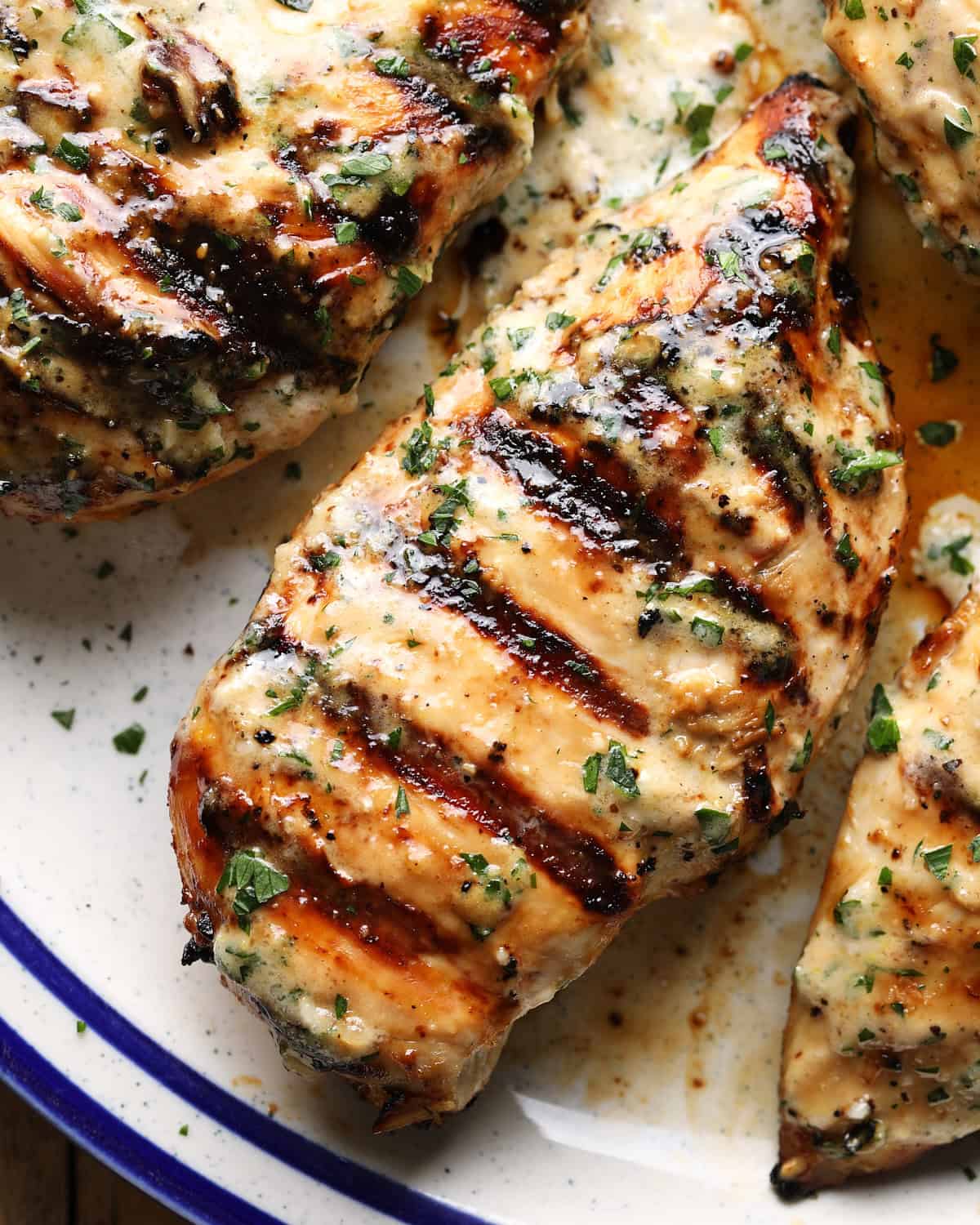
I initially assumed an overnight marinade would make the chicken even more flavorful, but it actually made the exterior noticeably mushy. After testing it again, I found that 3–6 hours is the sweet spot. That gives the salt and Caesar flavor time to season the chicken without letting the acidic dressing and lemon damage its texture.
The other trick that makes this recipe different is reserving some of the clean marinade before adding the raw chicken. I mix it with melted butter, Parmesan, and parsley, then brush it over the hot chicken after grilling. It adds a fresh layer of Caesar flavor instead of relying only on the marinade.
For another boldly flavored grilled dinner, try my Grilled Chicken Fajitas. My Grilled Boneless Chicken Thighs are another great option if you prefer dark meat.
🔍 At a Glance
- ⏱️ Ready in: 3 hours 35 minutes ( 10 min. prep, 3 hours marinating, 25 min. cook)
- 👥 Serves: 6
- 📌 Main Ingredients: Chicken breasts, Caesar dressing, garlic, lemon, Parmesan
- 🔥 Cook Method: Grill
- 😋 Flavor Profile: Savory, garlicky, lemony, buttery, and cheesy
- 📝 Great For: Summer grilling, easy dinners, cookouts, and meal prep
Table of Contents
- 🔍 At a Glance
- Why This Recipe Works
- Ingredients & Why They Matter
- Why I Do Not Marinate This Chicken Overnight
- Caesar Grilled Chicken Step by Step
- Pro Tips for Perfect Caesar Marinated Grilled Chicken
- Common Mistakes
- Swap It Up: Variations to Try
- No Grill? Make This Caesar Chicken on the Stove
- What To Serve With This Recipe
- Caesar Grilled Chicken Recipe
- Recipe FAQs
- More Chicken Recipes
Why This Recipe Works
- Caesar dressing does most of the work. A creamy Caesar dressing already contains fat, acid, salt, Parmesan, and savory seasonings. Fresh garlic and lemon make it taste more like a homemade Caesar chicken marinade instead of plain bottled dressing.
- Controlled heat prevents scorching. Preheating the grill on high helps clean and heat the grates, but reducing it to medium-low before adding the chicken prevents the creamy dressing and garlic from burning before the thick chicken breasts cook through.
- The finishing sauce restores fresh Caesar flavor. Marinade flavor becomes more subtle as it cooks. Brushing the chicken with reserved marinade, butter, Parmesan, and parsley after grilling gives it a glossy finish and a final burst of rich, savory flavor.
Ingredients & Why They Matter
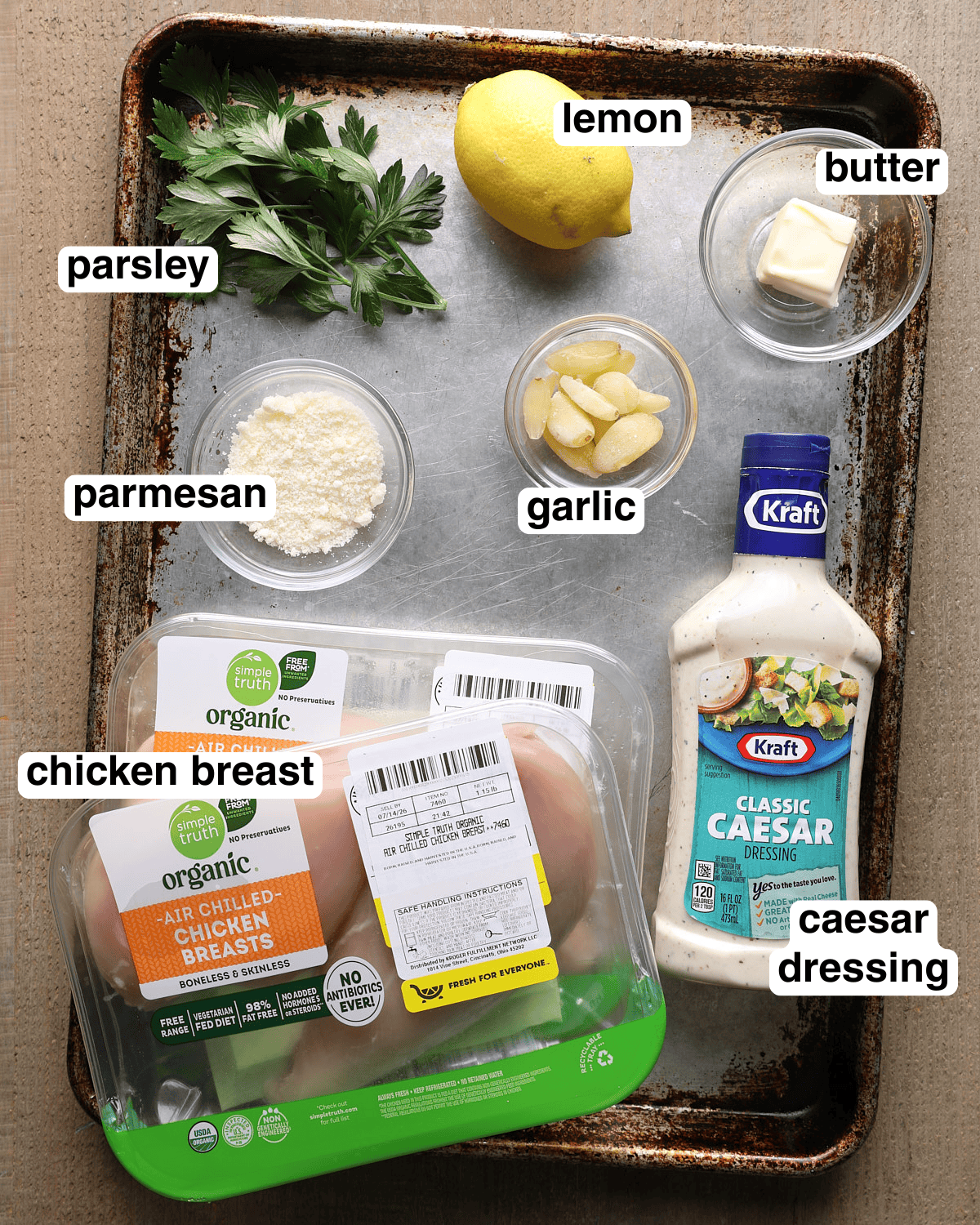
- Ingredients & Why They Matter
- Boneless Skinless Chicken Breasts: Chicken breasts are lean, mild, and a great base for the salty, savory Caesar marinade. If the breasts vary significantly in thickness, lightly pound the thicker ends so they cook more evenly. You can substitute 2 1/2 pounds of boneless skinless chicken thighs. Thighs stay especially juicy and usually cook more quickly, so begin checking them after about 5–7 minutes per side.
- Caesar Dressing: I usually use a less expensive creamy Caesar dressing for this recipe because you need a heaping cup, and the fresh garlic, lemon, Parmesan, and butter add plenty of extra flavor. Choose a full-fat dressing that you still enjoy on its own. It provides fat, acid, salt, and savory flavor while clinging well to the chicken.
- Fresh Garlic: Twelve cloves may sound like a lot, but this recipe marinates 2 1/2 pounds of chicken, and some of the garlic stays behind in the bag. Finely grate or mince it so the flavor distributes evenly and large pieces do not burn on the grill.
- Lemon Zest and Juice: The zest adds concentrated lemon flavor, while the juice brightens the rich Caesar dressing. Because the juice increases the acidity of the marinade, do not marinate the chicken overnight or the exterior can become mushy.
- Morton Kosher Salt: Use 1 teaspoon Morton kosher salt. For approximately the same saltiness, use 2 teaspoons Diamond Crystal kosher salt or 1/2 teaspoon fine sea salt or table salt. Caesar dressing, Parmesan, and salted butter are already salty, so avoid adding extra until you taste the finished chicken.
- Freshly Cracked Black Pepper: Black pepper adds a mild spicy bite that complements the garlic, lemon, and Parmesan. Add it to taste depending on how peppery your Caesar dressing already is.
- Salted Butter: Melted butter makes the finishing sauce richer and helps it coat the hot grilled chicken. It also balances the sharp lemon and garlic flavors.
- Grated Parmesan: Parmesan reinforces the classic Caesar flavor and adds saltiness and nuttiness to the finishing sauce. Finely grated Parmesan melts and blends more smoothly than thick shreds.
- Fresh Parsley: Fresh parsley adds color and a clean, herby finish to the buttery sauce. Substitute 1 teaspoon dried parsley for the 1 tablespoon fresh parsley. Stir dried parsley into the melted butter a minute or two before brushing so it has time to soften.
Find the full ingredient list and exact measurements in the recipe card below.
Why I Do Not Marinate This Chicken Overnight
Longer is not always better when it comes to marinating chicken.
I tested this Caesar dressing chicken marinade for longer than six hours, and the outside of the chicken became soft and mushy. The flavor was strong, but the texture was not nearly as good.
Caesar dressing commonly contains vinegar or lemon, and this recipe adds the juice of another whole lemon. Acid changes the shape of the proteins on the surface of the chicken. A few hours can make the surface more tender, but extended exposure can make it soft, pasty, or mealy rather than juicy. Marinades also work primarily near the surface, so leaving the chicken overnight does not necessarily mean the flavor will penetrate significantly deeper.
For this specific recipe, I recommend marinating the chicken for at least 3 hours but no longer than 6 hours.
| Marinating Time | Result |
|---|---|
| 30–60 minutes | Light Caesar flavor; usable when you are short on time |
| 2–3 hours | Well seasoned with a firmer texture |
| 3–6 hours | Best balance of flavor, moisture, and texture |
| 8 hours or overnight | Not recommended; the exterior can become mushy |
Caesar Grilled Chicken Step by Step
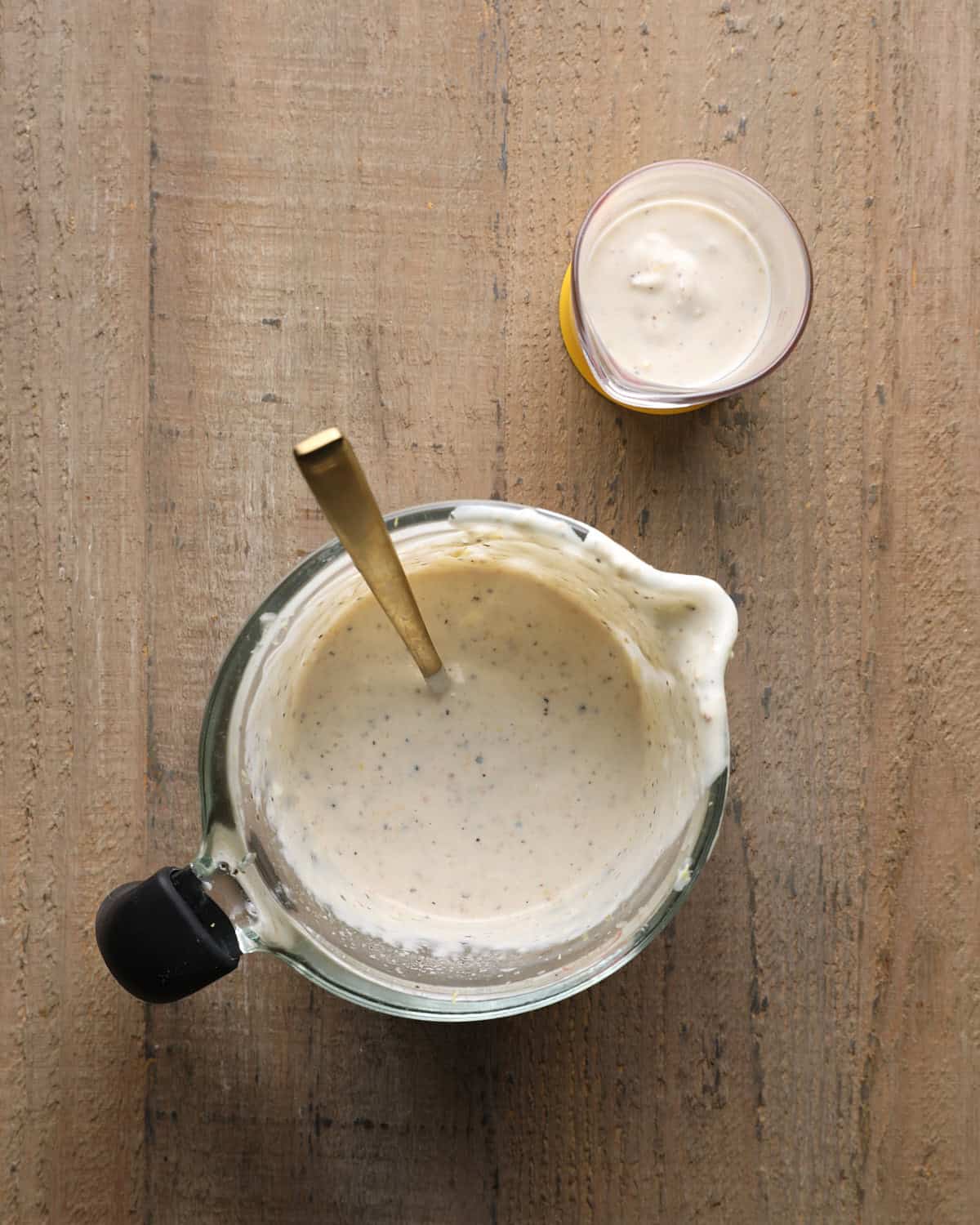
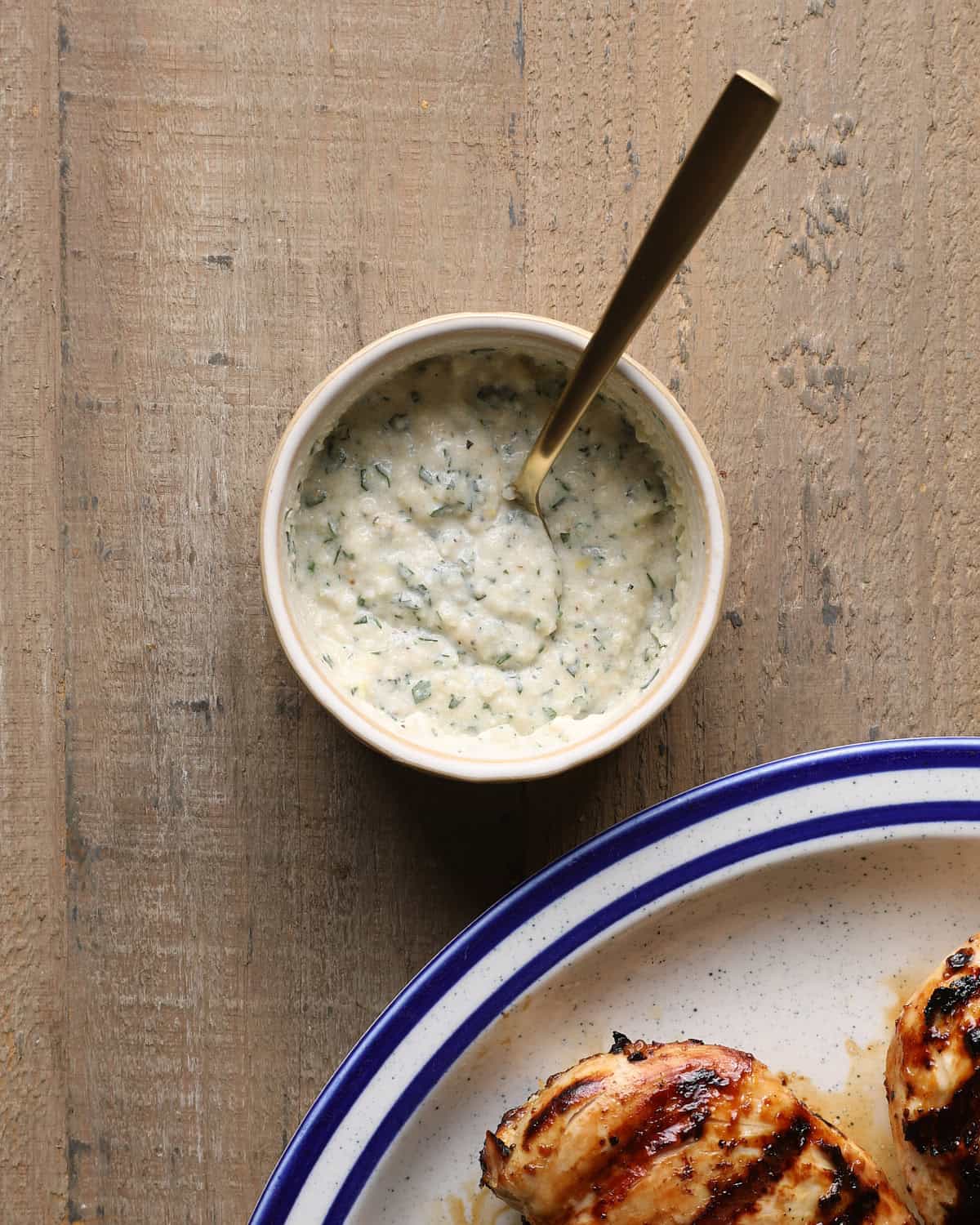
- Make and separate the marinade. In a large bowl, whisk together the Caesar dressing, finely grated garlic, lemon zest, lemon juice, Morton kosher salt, and black pepper. Before the marinade touches the raw chicken, transfer 1/4 cup to a separate small bowl. Cover and refrigerate it for the finishing sauce.
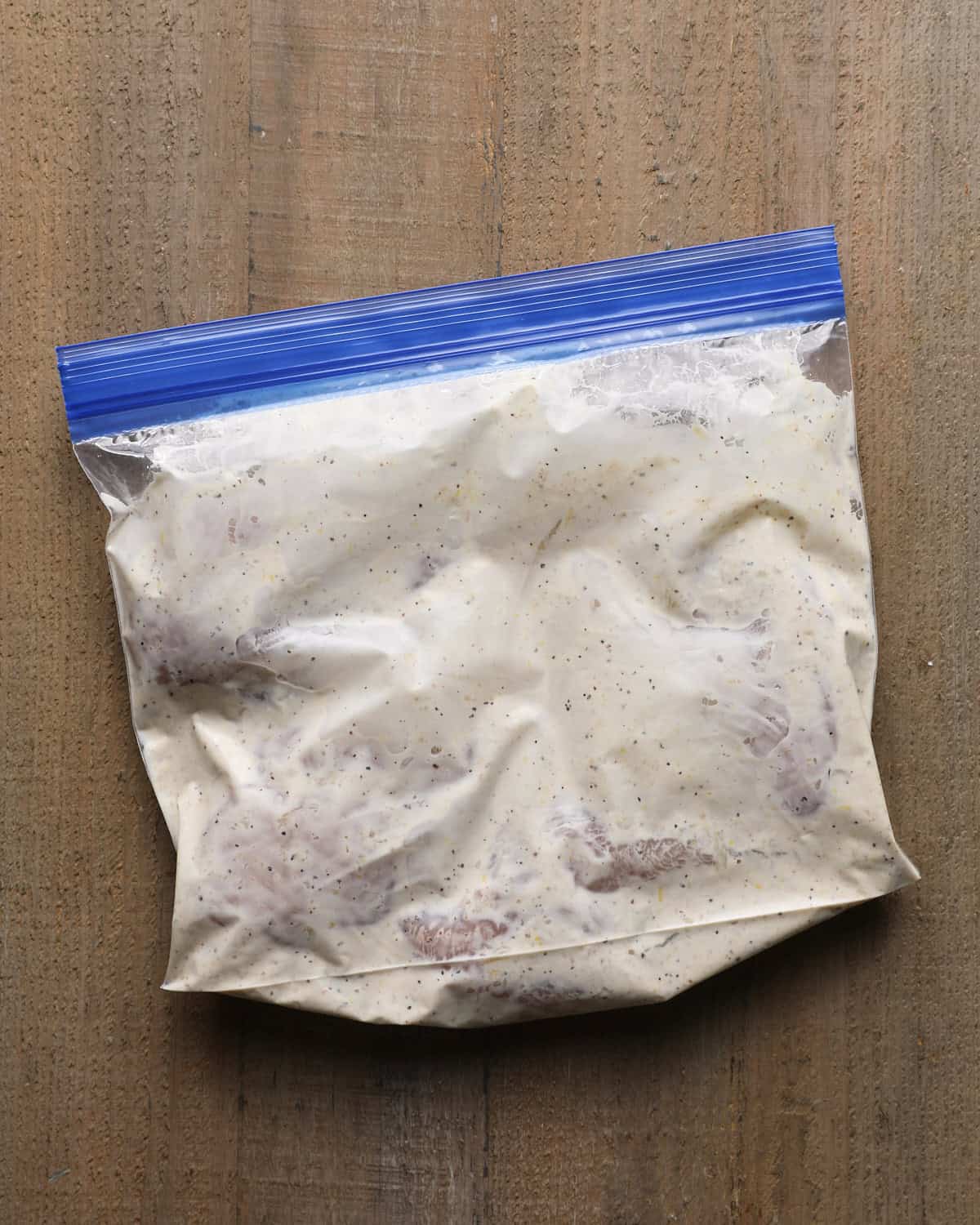
- Marinate the chicken in a bag. Add the chicken breasts and the remaining marinade to a gallon-size resealable bag. Press out the excess air, seal, and massage the bag until every piece is generously coated. Place the bag on a plate or tray and refrigerate for 3–6 hours. Do not marinate overnight.
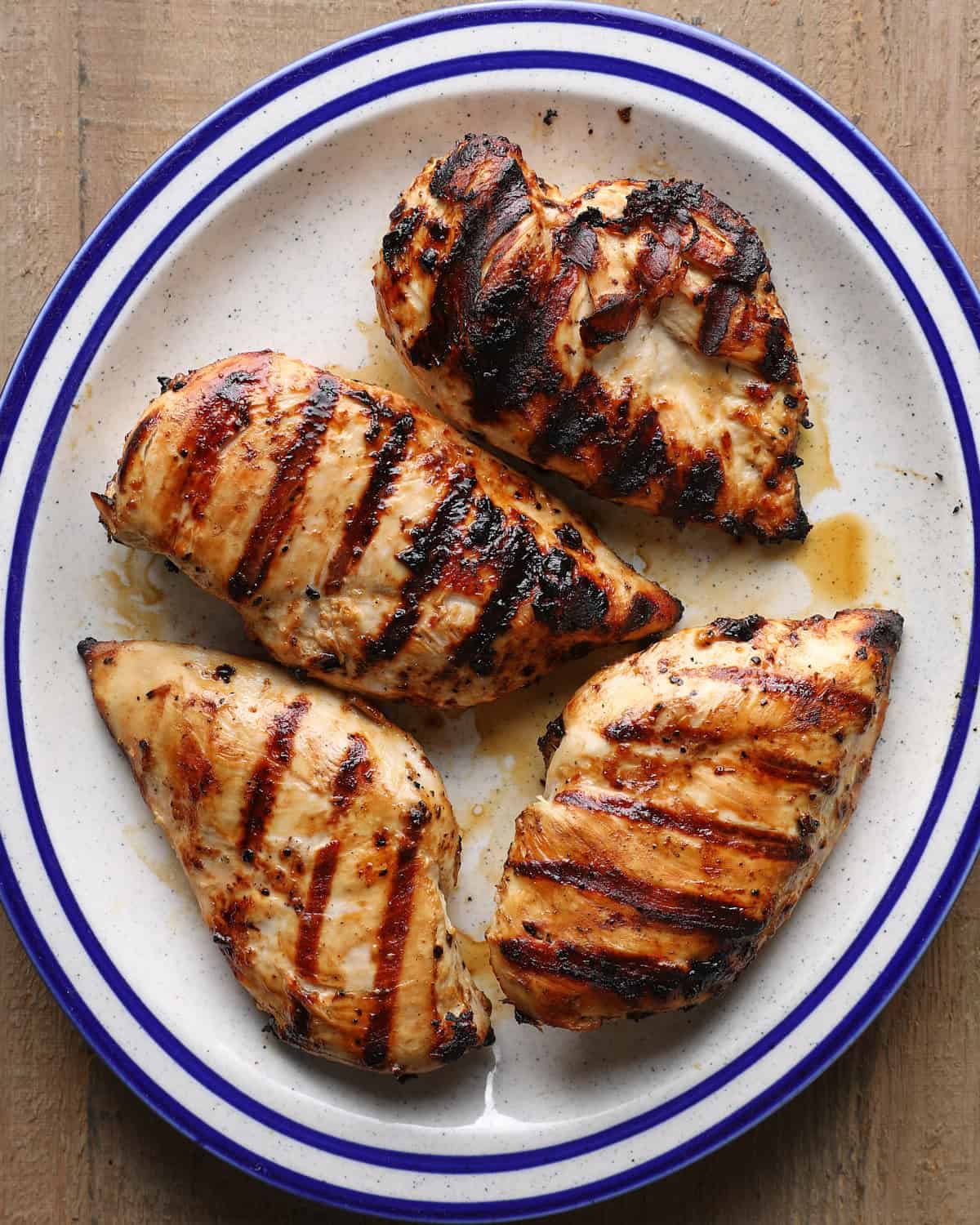
- Grill the chicken. Preheat the grill over high heat. Once the grates are thoroughly heated, reduce the heat to medium-low. Remove the chicken from the bag and let the excess marinade drip off. Place the breasts on the grill and cook for 10–12 minutes on the first side. Let them cook more than halfway through before attempting to flip. When ready, the chicken should begin to loosen naturally from the grates. Slide a sturdy spatula underneath each breast, flip, and continue grilling until the thickest part reaches 165°F. Cooking time on the second side will vary depending on thickness.
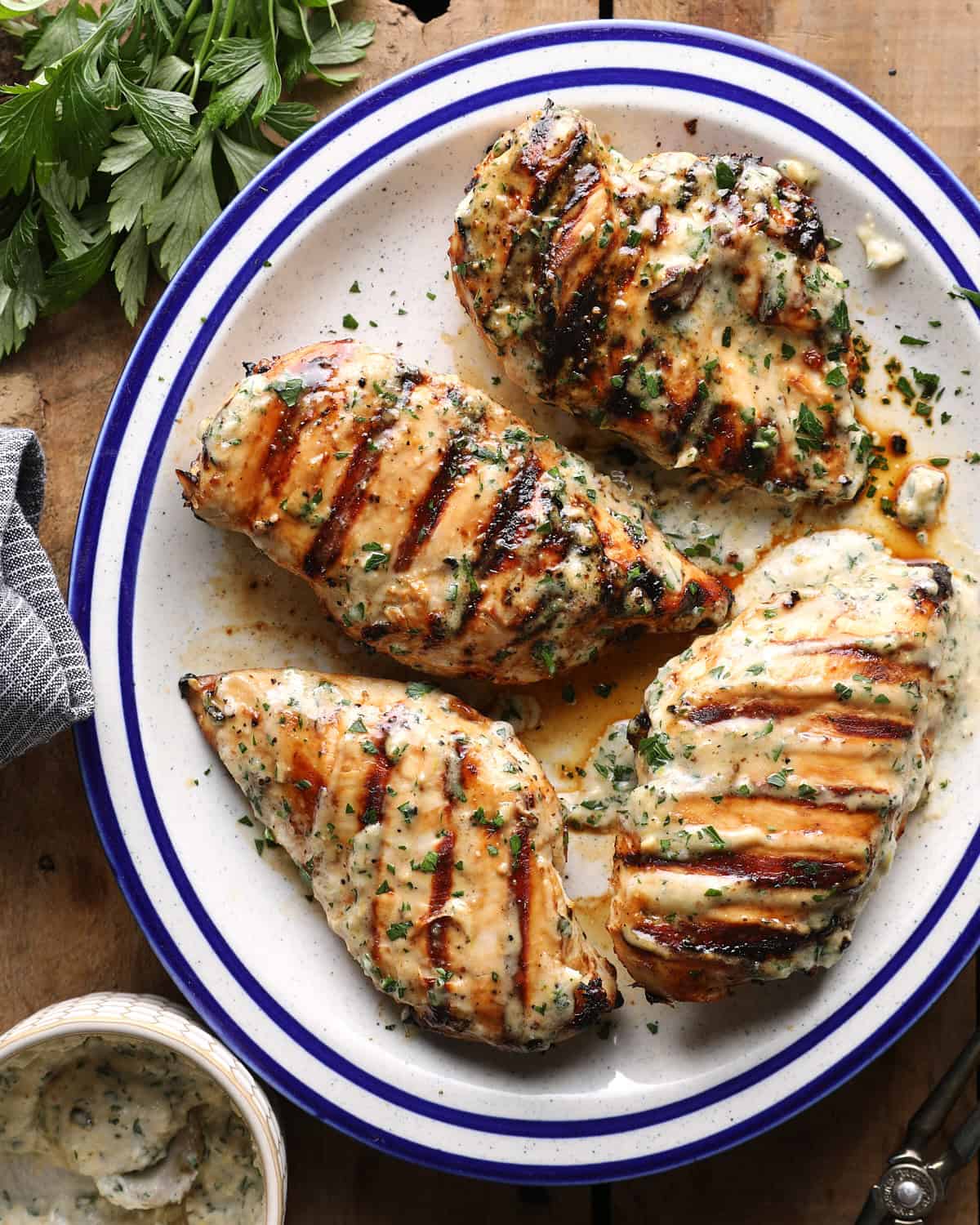
- Brush and rest. While the chicken finishes grilling, stir the reserved 1/4 cup marinade with the melted butter, Parmesan, and parsley. Transfer the cooked chicken to a clean platter and immediately brush it generously with the finishing sauce. Rest for 5 minutes before slicing against the grain.
💡Bri’s Best Tip
Do not assume an overnight marinade will produce more flavorful chicken. I tested it, and the exterior became noticeably mushy. Set a timer and keep the marinating time between 3 and 6 hours for the best Caesar flavor and texture.
Pro Tips for Perfect Caesar Marinated Grilled Chicken
- Reserve the finishing sauce first: Transfer 1/4 cup of marinade to a clean bowl before handling the raw chicken. Cover and refrigerate it until you are ready to mix in the butter, Parmesan, and parsley.
- Preheat high, then reduce the heat: Preheating the grill over high heat gets the grates hot enough for better browning. Lower the heat to medium-low before adding the chicken so the creamy dressing and garlic do not scorch.
- Use a spatula for flipping: Slide a wide spatula underneath the chicken instead of gripping it with tongs. The extra support helps keep the browned coating from tearing away from the meat.
- Check each piece separately: Chicken breasts can vary significantly in size. Test the thickest part of each breast with an instant-read thermometer and remove pieces individually as they reach 165°F.
Common Mistakes
- Marinating the chicken overnight: The Caesar dressing and lemon juice are acidic. I tested a longer marinating time, and the outside of the chicken became noticeably mushy. Keep the marinating time between 3 and 6 hours.
- Moving the chicken too soon: The chicken needs time to brown and naturally loosen from the grates. If it resists when you try to flip it, leave it alone for another minute or two instead of forcing it.
- Using marinade that touched raw chicken: Discard all marinade remaining in the bag. Only use the 1/4 cup that was reserved before the raw chicken was added to make the finishing sauce.
- Slicing the chicken immediately: Cutting into the chicken as soon as it leaves the grill releases more of its juices. Brush it with the finishing sauce, rest it for 5 minutes, and then slice against the grain.
Swap It Up: Variations to Try
- Add Dijon mustard: Whisk 1 tablespoon Dijon mustard into the marinade for a sharper, tangier Caesar flavor. Dijon also helps the marinade cling to the chicken.
- Add pesto: Stir 2 tablespoons prepared basil pesto into the marinade. Replace the parsley in the finishing sauce with 1 tablespoon chopped fresh basil, or use 1 teaspoon dried basil.
- Make it spicy: Add 1/4 teaspoon cayenne pepper or 1/2 teaspoon crushed red pepper flakes to the marinade. For more heat, stir a few dashes of hot sauce into the finishing sauce.
No Grill? Make This Caesar Chicken on the Stove
You can easily make this Caesar dressing marinated chicken in a skillet instead. Pan-searing gives the chicken a golden exterior while keeping the inside juicy, making it a great option when the weather is not ideal for grilling or you want a quicker indoor method.
- Prepare the chicken. Remove the chicken from the marinade and let the excess drip off. Lightly pound the thicker portions so each breast is relatively even. Discard the marinade that touched the raw chicken.
- Preheat the skillet. Heat 1 tablespoon olive oil in a large skillet over medium heat. Once the oil is hot and shimmering, add the chicken in a single layer. Cook in batches if needed so the pan is not crowded.
- Sear the chicken. Cook for 6–8 minutes on the first side without moving it. Flip with a spatula, reduce the heat to medium-low, and cook for another 5–8 minutes, or until the thickest part reaches 165°F. If the exterior is browning too quickly, add 1–2 tablespoons of water and cover the pan for the final few minutes.Brush and rest. Stir the reserved marinade with the melted butter, Parmesan, and parsley. Brush it over the hot chicken, then rest for 5 minutes before slicing.
What To Serve With This Recipe
The rich Caesar, garlic, lemon, and Parmesan flavors pair best with simple potatoes, grilled vegetables, pasta salads, and fresh greens.
- Oven Roasted Yukon Gold Potatoes: Crispy Parmesan potatoes echo the savory cheese in the chicken.
- Grilled Zucchini and Yellow Squash: Cook the vegetables while the grill is already hot for a complete summer dinner.
- Garlic Parsley Potatoes: Buttery, herby potatoes work well with the lemon and garlic in the marinade.
- Pesto Orzo Salad: A chilled orzo salad is a great option for cookouts, meal prep, or warm-weather dinners.
- Savory Roasted Sweet Potatoes: The sweet potatoes balance the salty Caesar and Parmesan flavors.
Leftover Caesar grilled chicken is also great cold or reheated in wraps, pasta salad, grain bowls, or a classic Caesar salad. Slice it just before serving so the chicken retains as much moisture as possible.
Caesar Grilled Chicken
Equipment
Ingredients
Chicken and Marinade
- 2 1/2 pounds boneless skinless chicken breasts about 4–6 breasts, depending on size
- 1 heaping cup Caesar dressing preferably creamy and full-fat
- 12 cloves garlic finely grated or minced
- 1 large lemon zested and juiced
- 1 teaspoon Morton kosher salt
- freshly cracked black pepper to taste
Finishing Sauce
- 1/4 cup reserved Caesar marinade set aside before adding the raw chicken
- 2 tablespoons salted butter melted
- 2 tablespoons grated Parmesan cheese preferably finely grated
- 1 tablespoon chopped fresh parsley
Instructions
- Make and separate the marinade. Whisk together the Caesar dressing, garlic, lemon zest, lemon juice, Morton kosher salt, and black pepper. Before adding the raw chicken, reserve 1/4 cup of the marinade in a separate small bowl. Cover and refrigerate it for the finishing sauce.1 heaping cup Caesar dressing12 cloves garlic1 large lemon1 teaspoon Morton kosher saltfreshly cracked black pepper
- Marinate the chicken. Add the chicken breasts and remaining marinade to a gallon-size resealable bag. Massage until evenly coated, press out the excess air, and seal. Refrigerate for 3–6 hours. Do not marinate overnight.2 1/2 pounds boneless skinless chicken breasts
- Grill the chicken. Preheat the grill over high heat, then reduce it to medium-low. Remove the chicken from the bag and let the excess marinade drip off. Grill for 10–12 minutes on the first side, allowing it to cook more than halfway through. Do not rush the flip. When the chicken begins to loosen naturally from the grates, flip it with a spatula. Continue grilling until the thickest portion reaches 165°F.
- Brush and rest. Stir the reserved marinade with the melted butter, Parmesan, and parsley. Brush it generously over the chicken immediately after removing it from the grill. Rest for 5 minutes before slicing against the grain.1/4 cup reserved Caesar marinade2 tablespoons salted butter2 tablespoons grated Parmesan cheese1 tablespoon chopped fresh parsley
Notes
- Caesar dressing: Use a creamy, full-fat Caesar dressing that you already enjoy. Its flavor will come through clearly in the finished chicken.
- Reserve before marinating: Set aside the 1/4 cup of marinade before it touches the raw chicken. Discard everything left in the marinating bag.
- Do not marinate overnight: I tested a longer marinating time, and the acidic dressing made the exterior of the chicken mushy. Three to six hours produced the best texture.
- Control the grill heat: Preheat on high, then reduce to medium-low so the creamy dressing and garlic do not burn before the center cooks.
- Do not rush the flip: Let the chicken cook more than halfway on the first side. It should begin to release from the grates when it is ready.
- Storage: Refrigerate leftover chicken in an airtight container for 3–4 days. Reheat gently to avoid drying it out.
Nutrition
Nutrition information is automatically calculated, so should only be used as an approximation.
Recipe FAQs
The Caesar dressing and fresh lemon juice are both acidic. Acid changes the structure of proteins on the chicken’s surface. Given enough time, the exterior can transition from tender to soft, pasty, or mealy.
This does not mean that every acidic marinade has the same timing. The concentration and type of acid matter. For this exact recipe, however, I found that marinating overnight negatively affected the texture.
Only if you reserve it before adding the raw chicken. Set aside 1/4 cup of clean marinade first, then combine it with melted butter, Parmesan, and parsley.
Discard everything remaining in the bag after removing the raw chicken.
Refrigerate the chicken in an airtight container within two hours of cooking and use it within 3–4 days.
Reheat individual portions gently in a covered skillet over medium-low heat with a small splash of water. You can also microwave the chicken in short intervals at reduced power. Avoid prolonged high heat, which can dry out the breasts.
More Chicken Recipes

Did you make this recipe?
If you try this recipe, please leave a star rating in the recipe card below and/or comment! I always appreciate your feedback.
Follow me on all of the platforms below.






This ceaser grilled chicken recipe looks super tender and packed with flavour, I will definitely be making this for dinner, thank you for sharing!
The Caesar marinade gave the chicken so much flavor, and the buttery Parmesan finish made it even better. I really liked the 3 to 6 hour marinating tip too, since the texture stayed juicy without getting soft.
I gave this recipe a try, and it exceeded my expectations. I’ll definitely be making this grilled chicken again!
A new way to enjoy grilled chicken — this marinade made all the difference.
Very juicy chicken and a real crowd pleaser at our BBQ