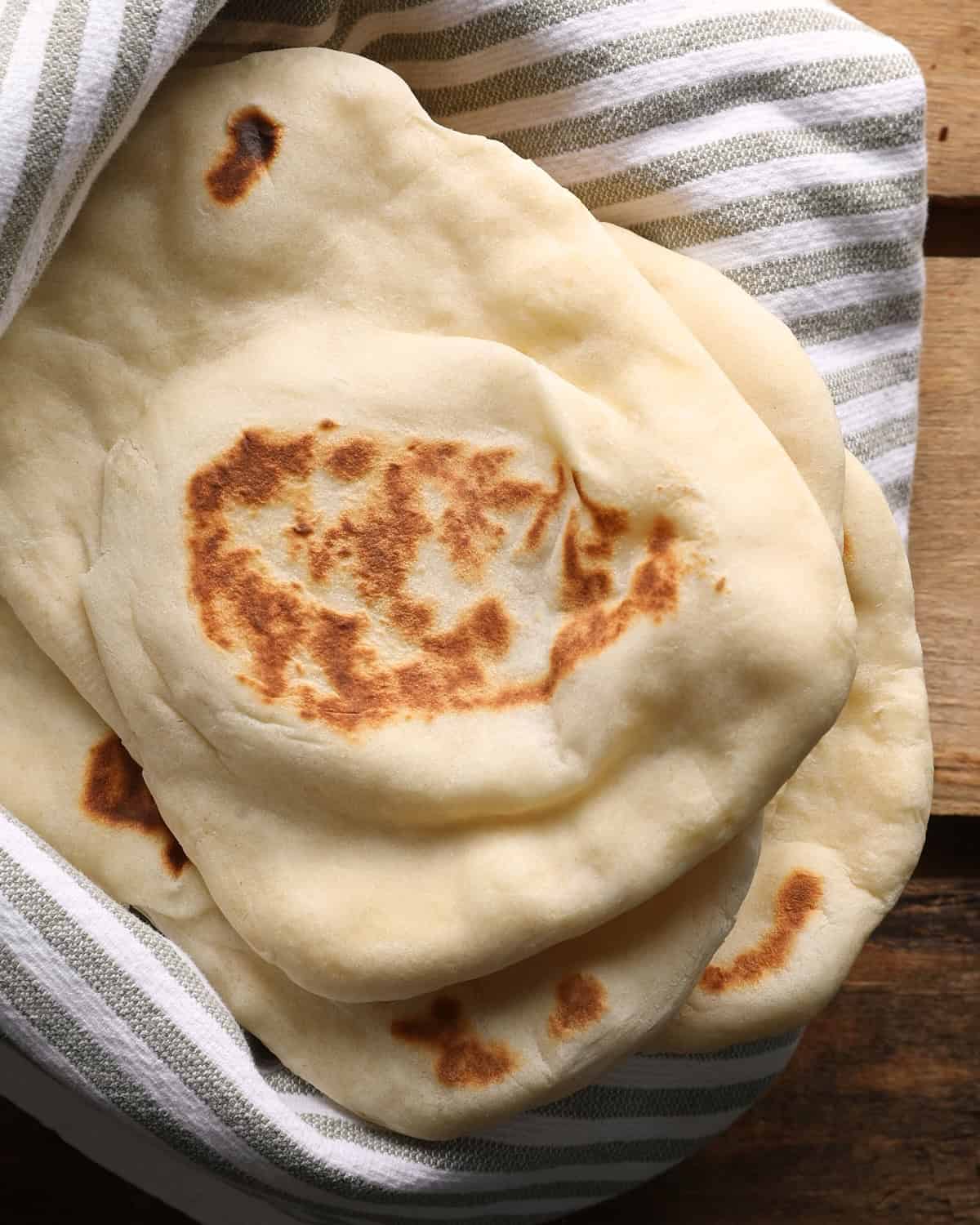
This Easy No-Yeast Naan is soft and chewy, with puffy bubbles and golden brown spots. The flatbreads are pliable enough to fold around a filling and just as good torn into pieces for dipping. Cook them in a hot skillet and, if you like, brush them with warm garlic butter as they come off the pan.
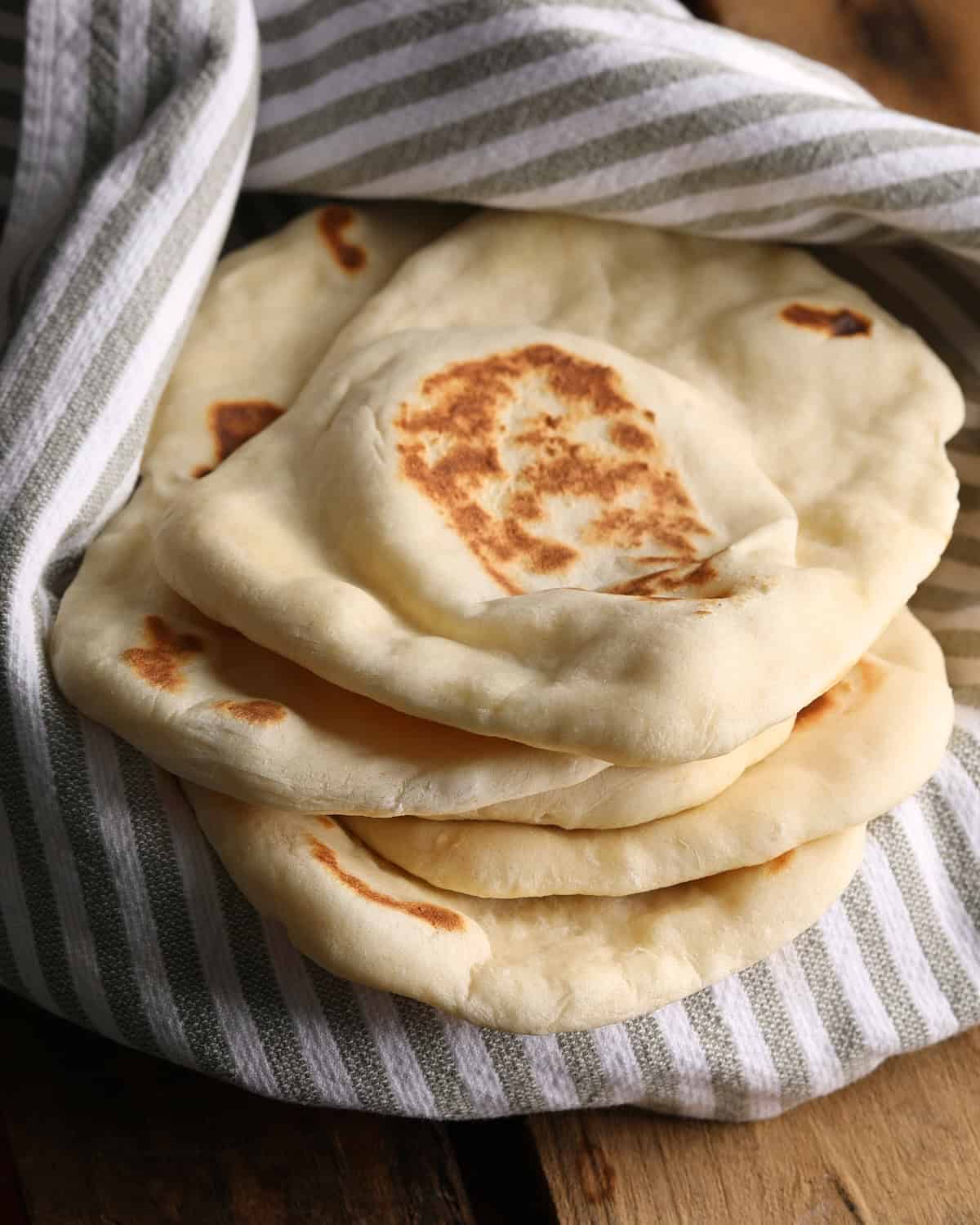
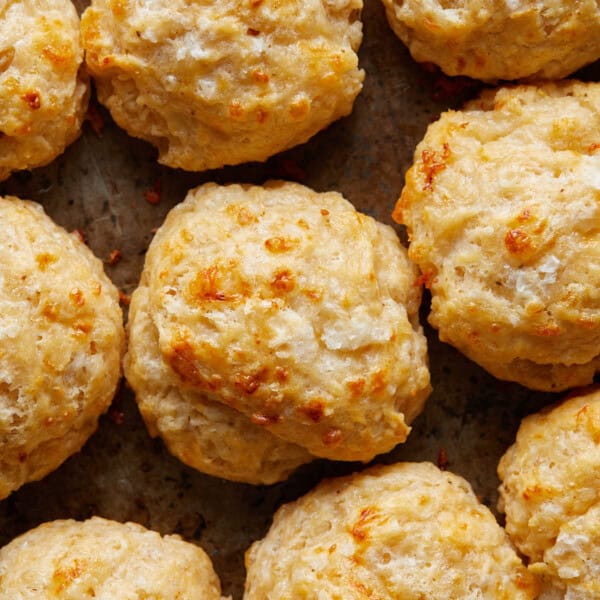
The first time I mixed the dough, two cups of flour left it too sticky to shape. The extra quarter cup made the difference. With the amounts below, the dough comes together without needing extra flour on the counter. If you want another bread you can make without yeast, try my Easy Cheddar Drop Biscuits.
🔍 At a Glance
- ⏱️ Time: 20 minutes prep + 15 minutes rest + 15 minutes cook (50 minutes total)
- 👥 Yields: 6 small flatbreads
- 📌 Main Ingredients: Bread flour, plain nonfat Greek yogurt, and baking powder
- 🔥 Cook Method: One at a time in a hot, dry skillet
- 😋 Flavor Profile: Mild and lightly tangy, with toasted spots and a soft, chewy center
- 📝 Great For: Scooping up saucy dinners or making quick flatbread pizzas
Table of Contents
Why This Recipe Works
- Baking powder gives the dough lift. It lets the flatbreads puff in the skillet without waiting for yeast to rise.
- Greek yogurt keeps the crumb soft. A small amount adds tenderness and a little tang while leaving the bread sturdy enough to fold.
- A hot skillet sets the outside quickly. The bread develops brown spots where it touches the pan while the center stays pliable.
Ingredients & Why They Matter
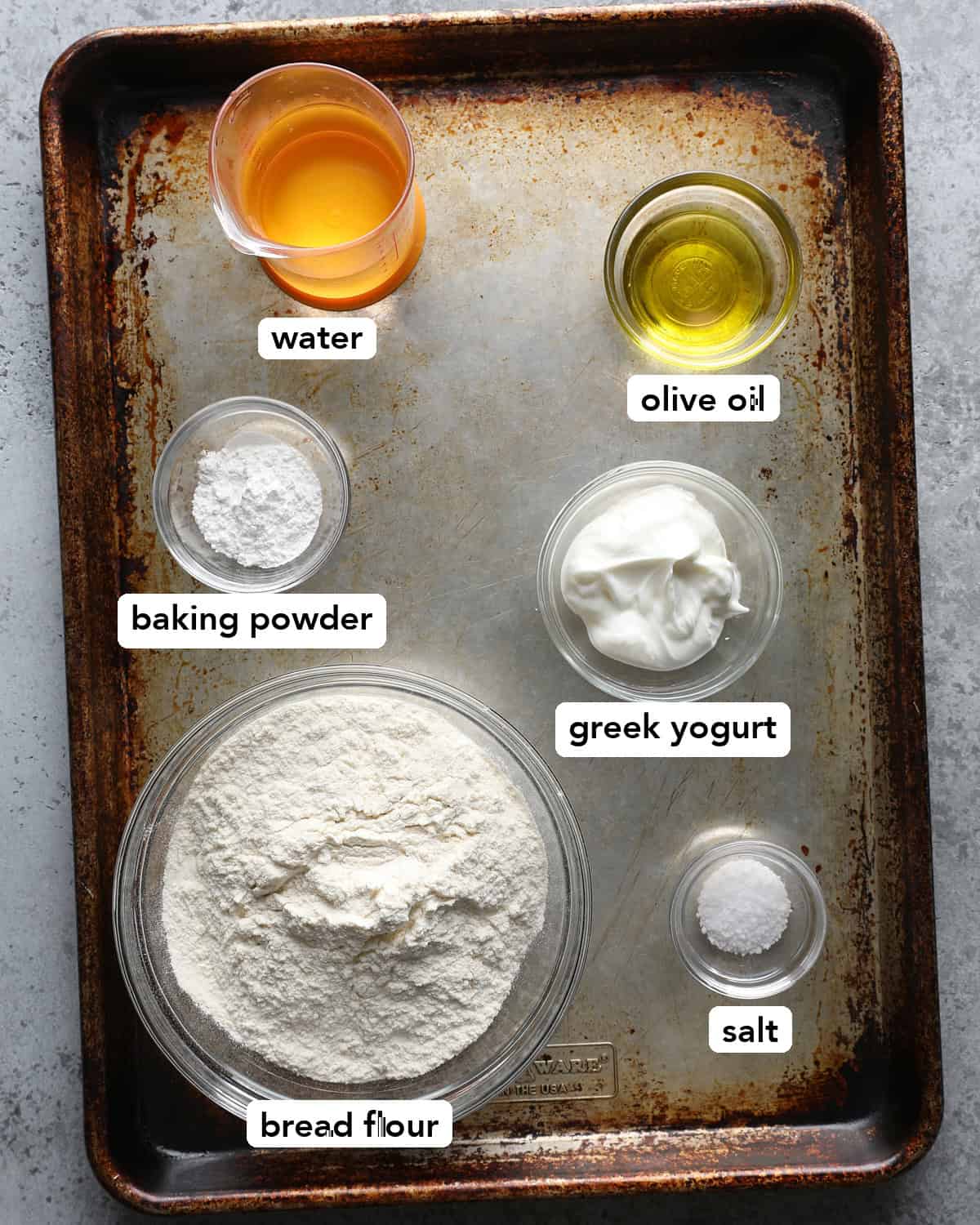
- Bread flour: I used bread flour for a little extra chew. All-purpose flour works in the same amount by volume or weight if that’s what you have.
- Baking powder: This is the dough’s only leavener. Use baking powder, since baking soda alone won’t behave the same way.
- Morton kosher salt: It seasons the dough throughout. If using Diamond Crystal kosher salt, use 2 teaspoons; for fine sea salt or table salt, use ½ teaspoon.
- Plain nonfat Greek yogurt: Use the thick, unsweetened kind. Regular yogurt is thinner and can change how the dough handles.
- Olive oil: A tablespoon goes into the dough to keep the bread tender and flexible.
- Water: Measure the full ½ cup. With the ingredients measured accurately, you shouldn’t need to add any more.
Find the full ingredient list and exact measurements in the recipe card.
How to Make Naan Without Yeast
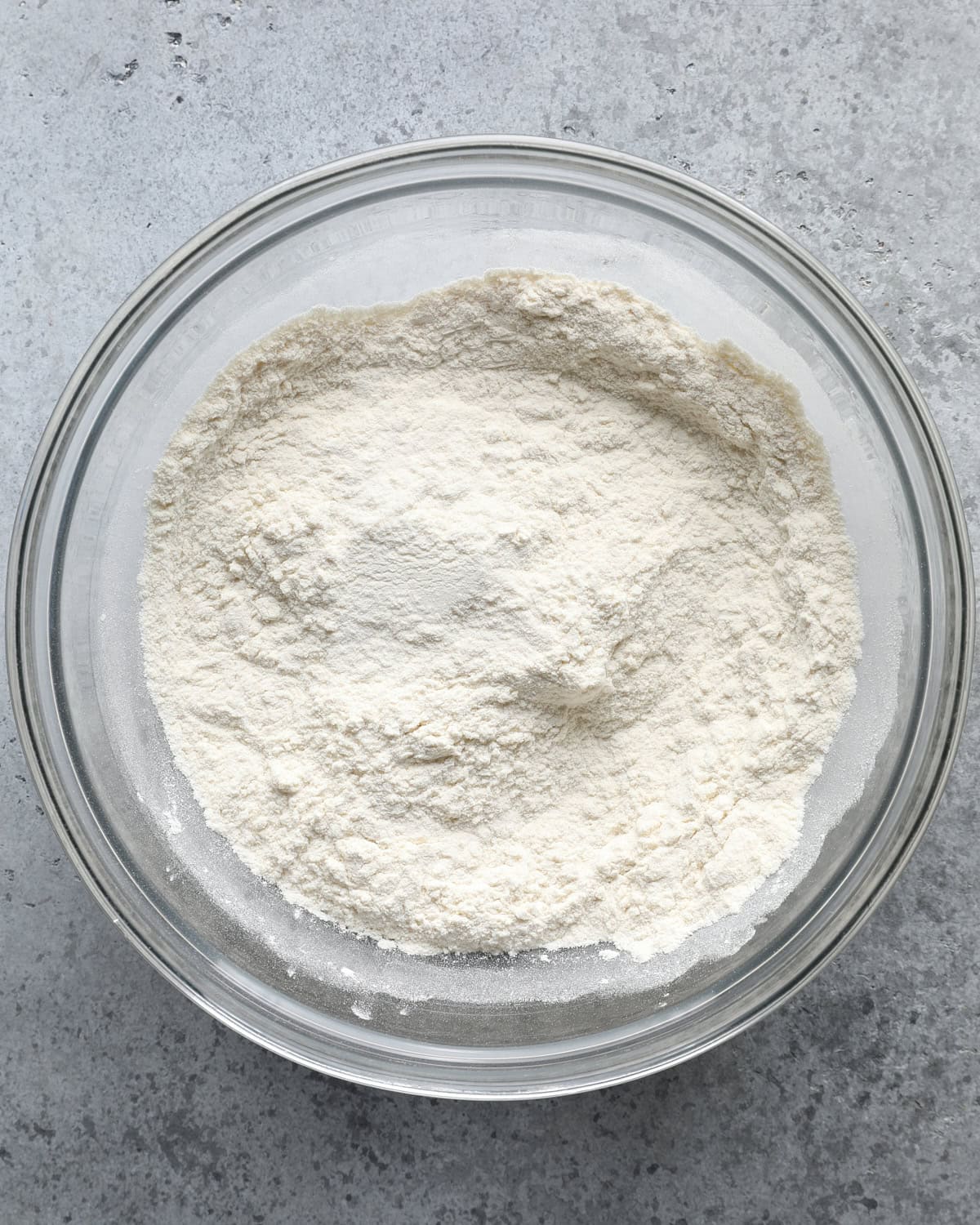
- Mix the dry ingredients. Whisk together the flour, baking powder, and salt in a large bowl.
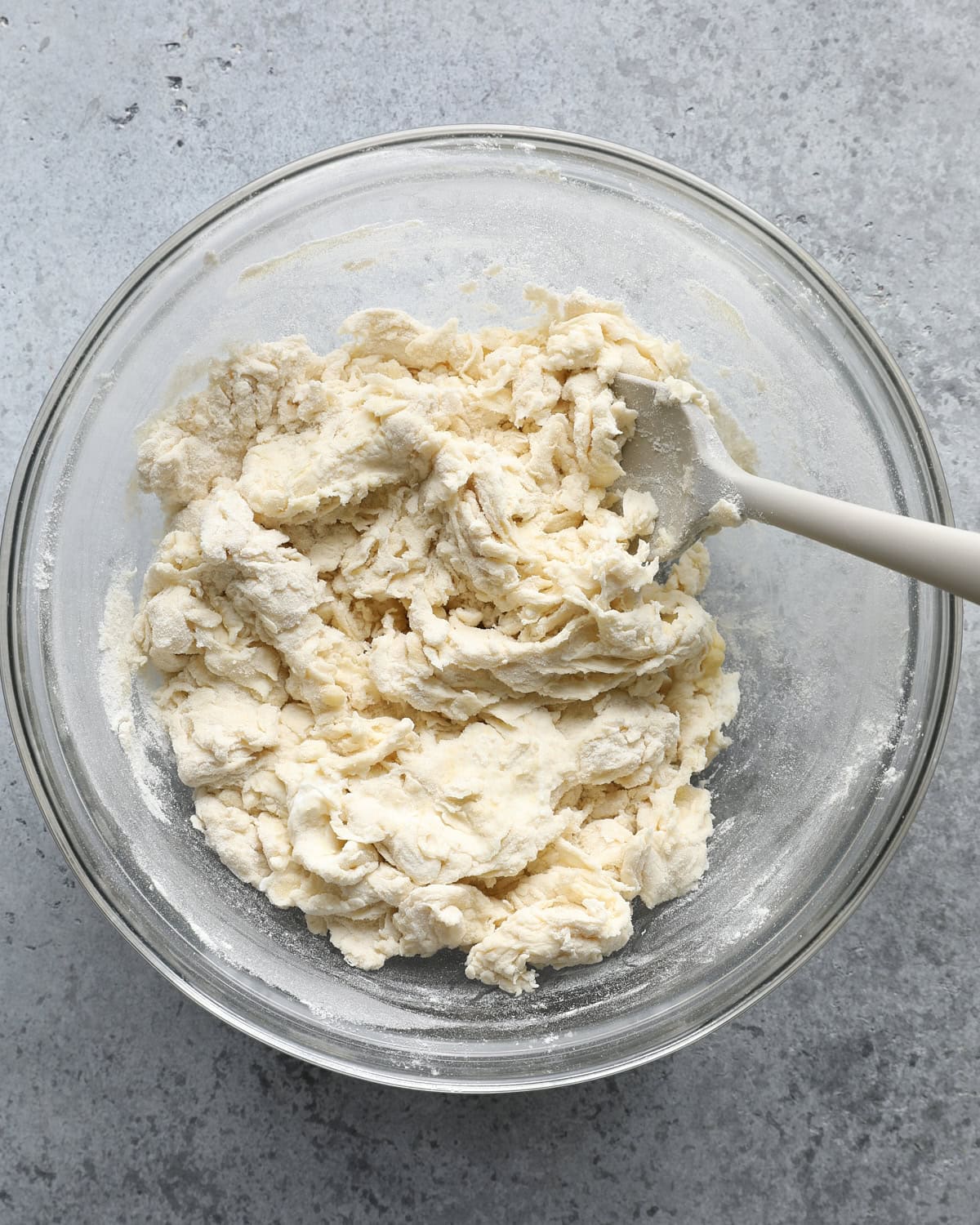
- Stir in the wet ingredients. Add the yogurt, olive oil, and water. Stir with a sturdy spatula until a shaggy dough forms.
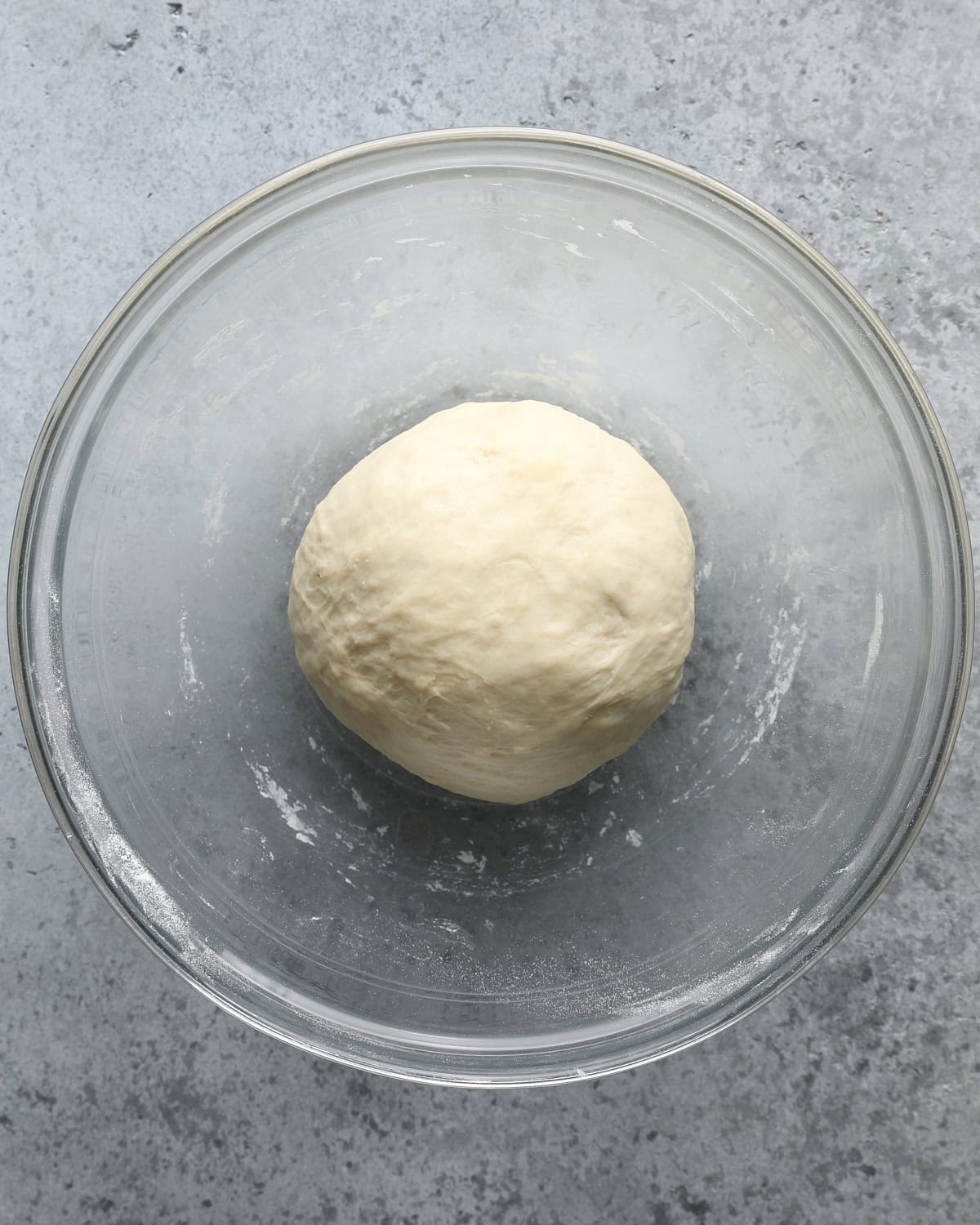
- Knead and rest the dough. Knead just until smooth, by hand or with a stand mixer fitted with a dough hook. Cover the dough and let it rest for 15 minutes.
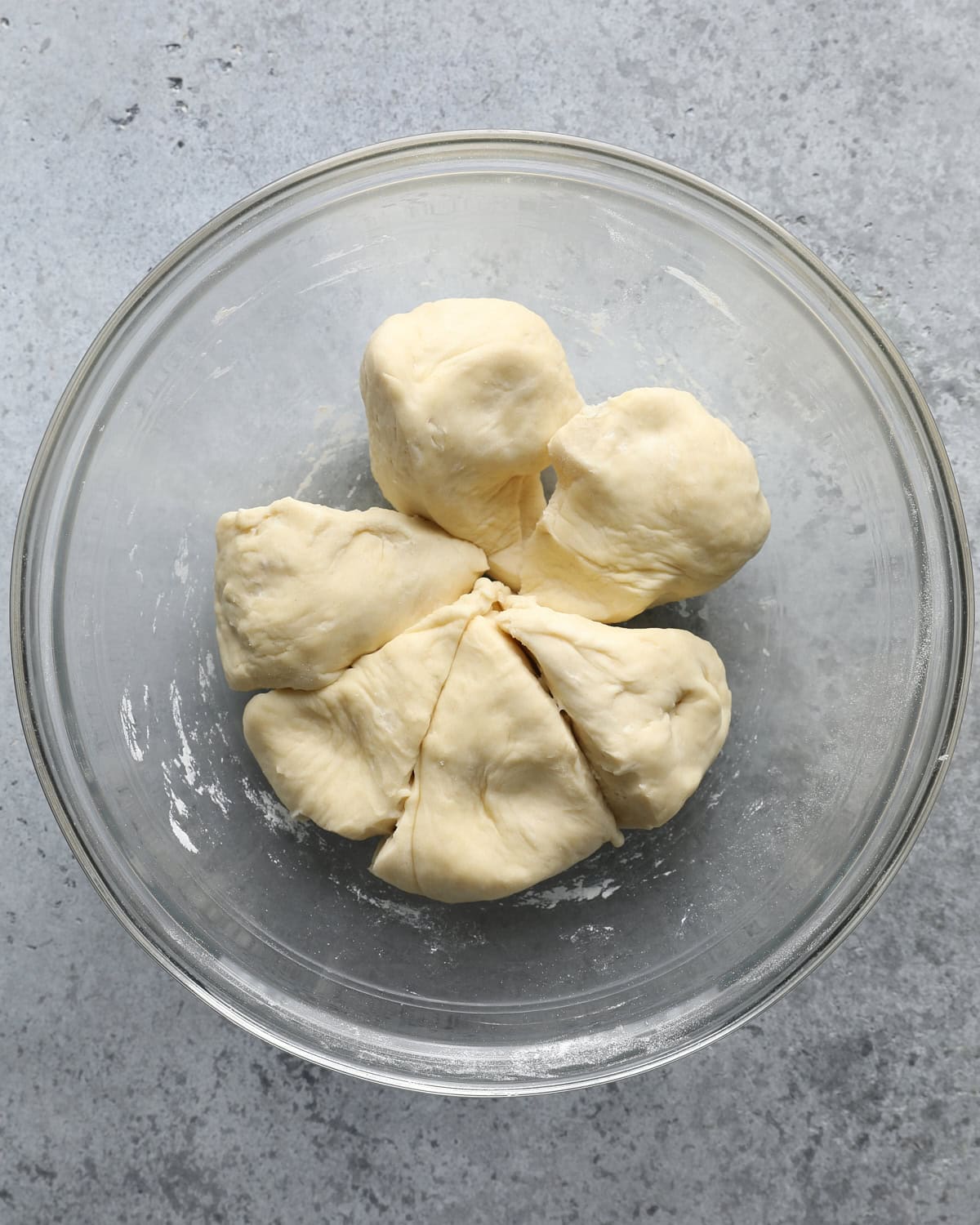
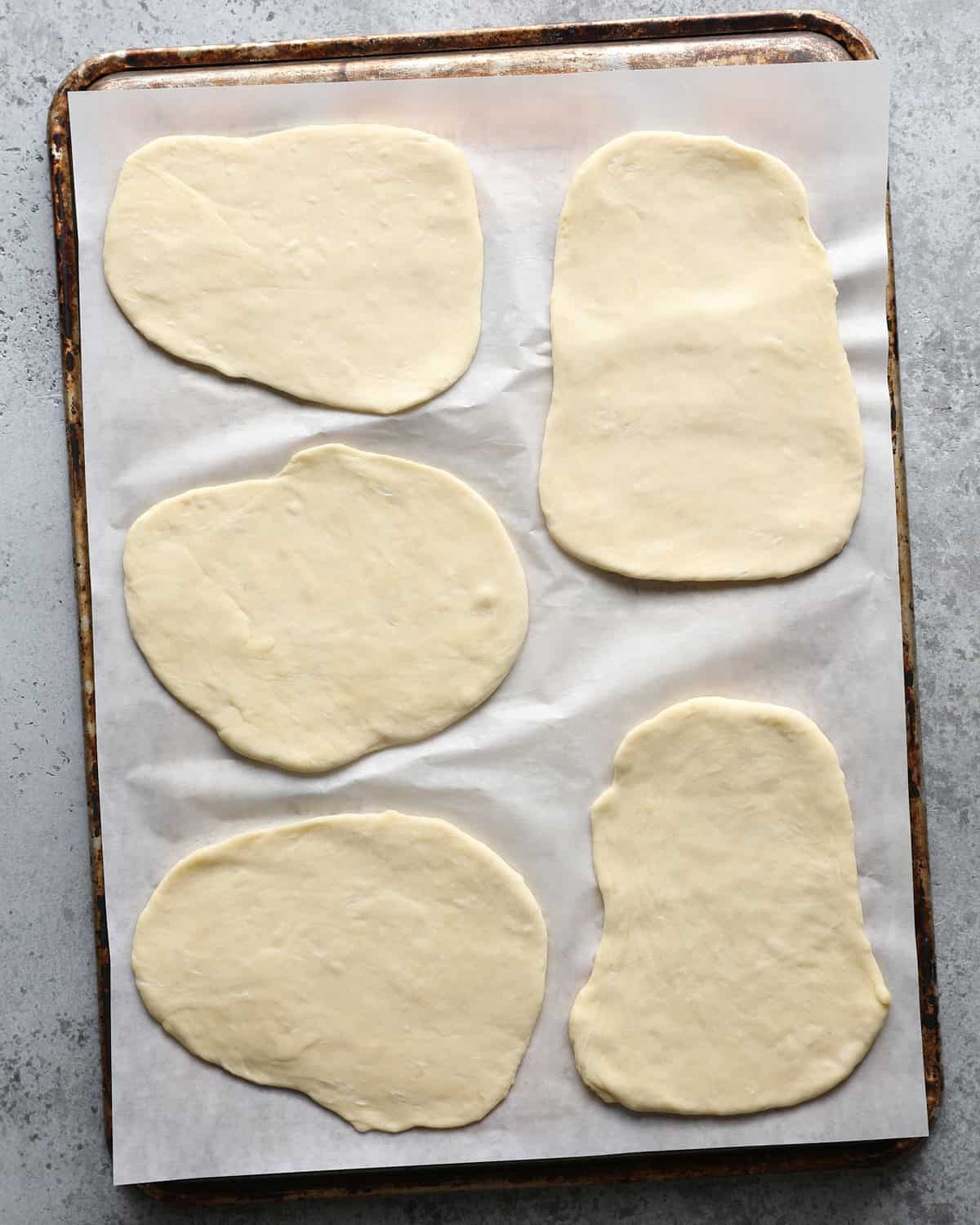
- Divide and press the dough. Cut the rested dough into 6 roughly equal wedges and press each into a small oval.
- Roll and cook the naan. Roll each oval to about 4–5 inches across and 6–7 inches long. As you finish rolling, heat a dry, heavy-bottomed skillet, preferably cast iron, to about 450°F if checking the surface temperature. Once all the pieces are rolled, start with the first one. Cook one at a time until the top bubbles and the underside has brown spots. Flip and cook until the second side has brown spots and the dough no longer looks raw.
Bri’s Best Tip
Roll them all before you cook the first one. I cook them in the order I rolled them. That gives each piece a few minutes to relax, which helps it bubble in the skillet.
Pro Tips
- Weigh the ingredients where weights are listed. If you’re using measuring cups for the flour, spoon it in and level it off. Scooping straight from the bag packs in more flour.
- Give it a gentle stretch on the way to the pan. Lift the dough with both hands and stretch it a little if you want a longer shape. Crooked ovals and uneven edges are fine.
- Keep the cooked stack covered. Tuck the warm naan into a clean kitchen towel while you cook the remaining pieces.
Common Mistakes
- Adding extra water before kneading. The dough looks rough when first mixed. Knead it before deciding it’s too dry. If it still won’t come together after kneading, add water 1 teaspoon at a time, only as needed.
- Dough sticking to the rolling pin. Before dusting the counter, check that you used the full 2¼ cups (293 g) of flour. With that amount, the dough should roll out without extra flour.
- Rolling the dough paper-thin. Leave the ovals a little thickness and resist rerolling them into perfect shapes. Thin or overworked dough can puff less.
- Flipping by the clock. Thicker and thinner pieces cook at different speeds. Lift an edge to check the underside for brown spots before flipping. If it darkens before bubbles form, lower the heat a little for the next piece.
Variation: Garlic Butter Naan
While the dough rests, melt 3 tablespoons (42 g) salted butter in a small saucepan over low heat. Stir in 2 finely minced garlic cloves and cook for 30–60 seconds, just until fragrant. Take the pan off the heat and stir in 1 tablespoon chopped parsley, if you like. Brush the butter over the warm naan. For an oven-baked bread with the same garlic butter flavor, try my Homemade Garlic Rolls.
Did you make this recipe?
If you try this recipe, please leave a star rating or comment. I appreciate your feedback!
What to Serve With Naan
- With curry: Serve warm naan with Healthy Chicken Tikka Masala or Easy Coconut Curry Shrimp to scoop up the sauce.
- For an appetizer: Tear the warm naan into wedges and scoop up Baked Feta Dip with Tomatoes.
- With soup: Set out a stack alongside Chicken & Rice Soup (Instant Pot) for dipping into the broth.
- For pizza night: Use the cooked flatbreads as the bases for Pepperoni Flatbread Pizza (Naan).
No Yeast Naan
Equipment
Ingredients
Dough
- 2 1/4 cups (293 g) bread flour
- 2 teaspoon baking powder
- 1 teaspoon Morton kosher salt
- 1/4 cup (60 g) Greek yogurt plain nonfat
- 1 tablespoon olive oil
- 1/2 cup (120 g) water
Optional Garlic Butter
- 3 tablespoons (42 g) salted butter
- 2 clove garlic finely minced
- 1 tablespoon fresh parsley chopped, optional
Instructions
- Mix the dry ingredients. In a large bowl, whisk together the bread flour, baking powder, and salt. 2¼ cups bread flour2 teaspoons baking powder1 teaspoon Morton kosher salt
- Stir in the wet ingredients. Add the Greek yogurt, olive oil, and water. Stir with a sturdy spatula until the mixture forms a shaggy dough. ¼ cup Greek yogurt1 tablespoon olive oil½ cup water
- Knead and rest the dough. Knead by hand or with the dough hook on a stand mixer just until the dough is smooth. Cover and rest for 15 minutes.
- Divide and press the dough. Cut the dough into 6 roughly equal wedges. Press each into a small oval.
- Roll and cook the naan. Roll all 6 pieces to about 4–5 inches across and 6–7 inches long. As you finish rolling, heat a dry, heavy-bottomed skillet, preferably cast iron, to about 450°F if checking the surface temperature. Start with the first piece you rolled and cook one at a time in rolling order. Cook until the top bubbles and the underside has brown spots. Flip and cook until the second side has brown spots and the dough no longer looks raw. Keep the cooked naan covered with a clean towel. If making garlic butter, you can prepare it during the dough rest. Melt the butter in a small saucepan over low heat. Stir in the garlic and cook for 30–60 seconds, until fragrant. Remove from the heat, stir in the parsley if using, and brush over the warm naan. 3 tablespoons salted butter2 cloves garlic1 tablespoon fresh parsley (optional)
Notes
- Measure accurately: Weigh the ingredients where weights are given. If measuring flour by volume, spoon it into the cup and level it off.
- Flour choice: All-purpose flour can replace bread flour in the same amount by volume or weight.
- Check the dough after kneading: It should come together with the water listed. If it’s still dry and crumbly, add water 1 teaspoon at a time until it holds together.
- Shape gently: Keep the ovals thick enough to puff. Uneven edges are fine. Roll all the pieces before cooking them in the same order.
- Watch the skillet: Leave it ungreased. Flip when the top bubbles and the underside is spotted brown; finish cooking until the dough no longer looks raw.
Nutrition
Nutrition information is automatically calculated, so should only be used as an approximation.
Recipe FAQs
Yes. Press each wedge into an oval with your palms, then lift it and gently stretch the edges with your hands. Rotate it as you go so the center doesn’t get too thin.
You don’t need to see it rise. The rest makes the dough easier to shape. The noticeable bubbles form when it hits the hot skillet, and their size will vary from piece to piece.
Stick with bread flour or all-purpose flour for this recipe. Self-rising flour already contains salt and leavening, so a straight swap would change both amounts.